9701 AS Level Chemistry
1Atomic Structure
1.1 Sub-atomic Particles
| Particle | Relative charge | Relative mass |
|---|---|---|
| Proton | +1 | 1 |
| Neutron | 0 | 1 |
| Electron | −1 | 1/1836 |
Atomic number Z = number of protons. Mass number A = protons + neutrons.
1.2 Electron Sub-shells and Orbitals
- Shells n = 1, 2, 3° subdivided into s, p, d sub-shells.
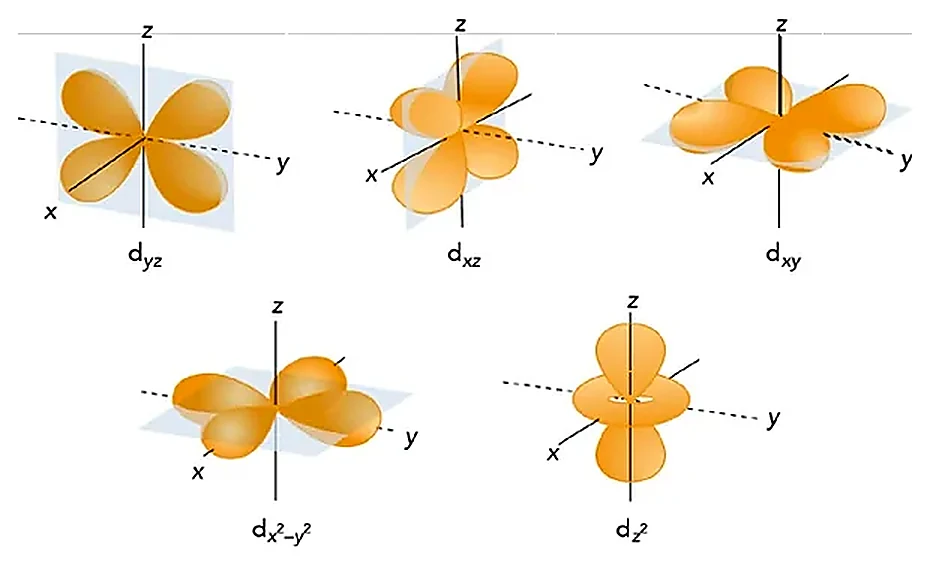
- s sub-shell: 1 orbital, max 2 electrons. p sub-shell: 3 orbitals, max 6 e−. d sub-shell: 5 orbitals, max 10 e−.
- Energy order: 1s < 2s < 2p < 3s < 3p < 4s < 3d < 4p.
- Hund's rule: electrons occupy degenerate orbitals singly before pairing.
- Pauli exclusion: max 2 e− per orbital, opposite spins.
1.3 Shapes of s and p Orbitals
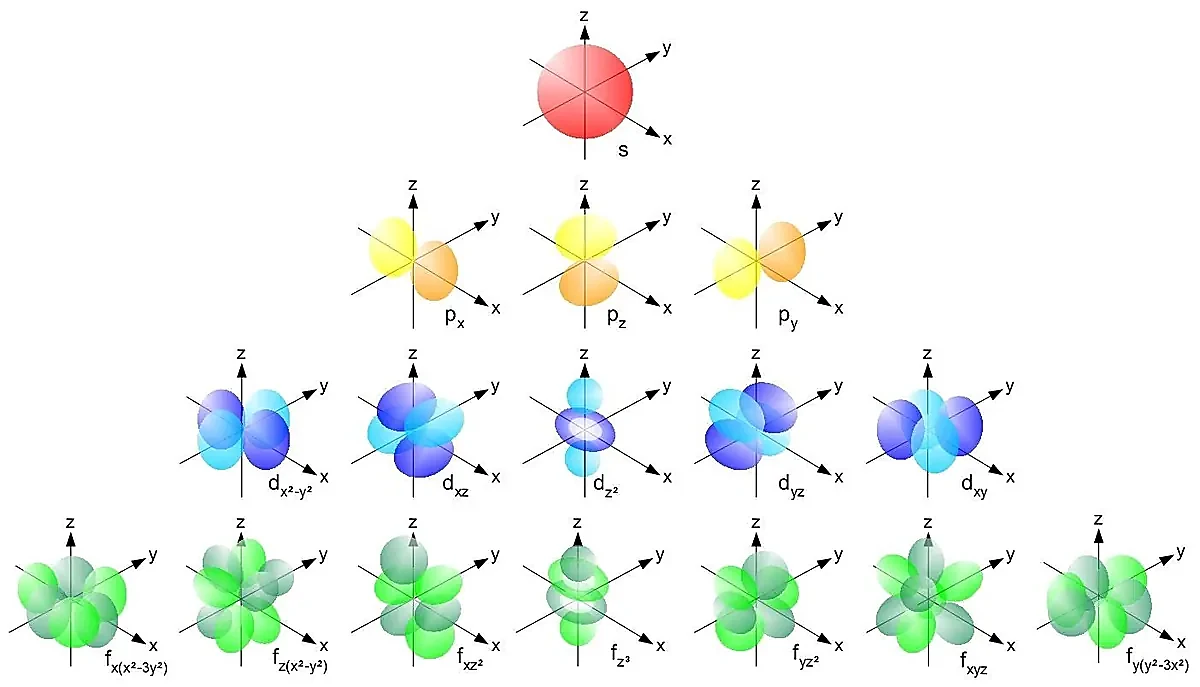
The s orbital is spherical; the p orbital is dumb-bell shaped, with three orientations along x, y, z axes.
1.4 Ionisation Energy
Trends:
- ↑ across a period — nuclear charge increases, atomic radius decreases, shielding roughly constant.
- ↓ down a group — extra shell increases atomic radius and shielding, outweighs ↑ nuclear charge.
- Dip at Group 13 (e.g. Al < Mg) — the electron removed is from 3p, less penetrating than 3s.
- Dip at Group 16 (e.g. S < P) — spin-pair repulsion in doubly-occupied p orbital.
Successive IEs always increase. A large jump reveals movement to an inner shell — used to identify the group.
Worked example
Successive IEs of an element (kJ mol−1): 738, 1451, 7733, 10 540. The big jump between IE2 and IE3 means there are only 2 electrons in the outer shell — element is in Group 2.1.5 Atomic and Ionic Radius Trends
Atomic radius decreases across a period (same shell, increasing nuclear charge) and increases down a group (new shell, more shielding). A cation is smaller than its atom; an anion is larger. A beam of protons is deflected towards the negative plate, electrons more strongly the other way (larger charge/mass), neutrons not at all.
1.6 Writing Ionisation-Energy Equations
First IE: X(g) → X+(g) + e−. Second IE starts from the ion: X+(g) → X2+(g) + e−. Use successive IE jumps to deduce the group and the electronic configuration.
2Atoms, Molecules and Stoichiometry
2.1 Key Definitions
2.2 Mole Calculations
2.3 Yield and Limiting Reagent
Identify the limiting reagent by comparing mole ratios from the balanced equation; the one that gives the smallest product amount is limiting.
2.4 Ionic Equations
Spectator ions (those unchanged on both sides) are omitted. Atoms and charge must balance.
Example
Full: AgNO3 + NaCl → AgCl + NaNO3Ionic: Ag+ + Cl− → AgCl(s)
2.5 Common Ions to Memorise
NH4+, OH−, NO3−, CO32−, HCO3−, SO42−, PO43−, MnO4−, Cr2O72−, Ag+, Zn2+, Pb2+.
2.6 Definitions You Must State
- Unified atomic mass unit: 1/12 of the mass of one 12C atom.
- Ar, relative isotopic mass, Mr and relative formula mass are all measured on that scale.
- One mole contains L = 6.02×10²³ specified particles.
- Empirical formula is the simplest whole-number ratio; molecular formula is a whole-number multiple of it.
- Hydrated salts contain water of crystallisation; anhydrous salts do not.
Mole calculations must cover reacting masses, gas volumes (24.0 dm3 mol−1 at r.t.p. if given), solution concentrations, percentage yield and limiting reagent. Always use state symbols in ionic equations and omit spectators.
3Chemical Bonding
3.1 Electronegativity
Increases across a period (↑ nuclear charge, ↓ radius); decreases down a group (↑ radius, more shielding). Large difference → ionic; small/zero → covalent. F is the most electronegative element.
3.2 Ionic Bonding
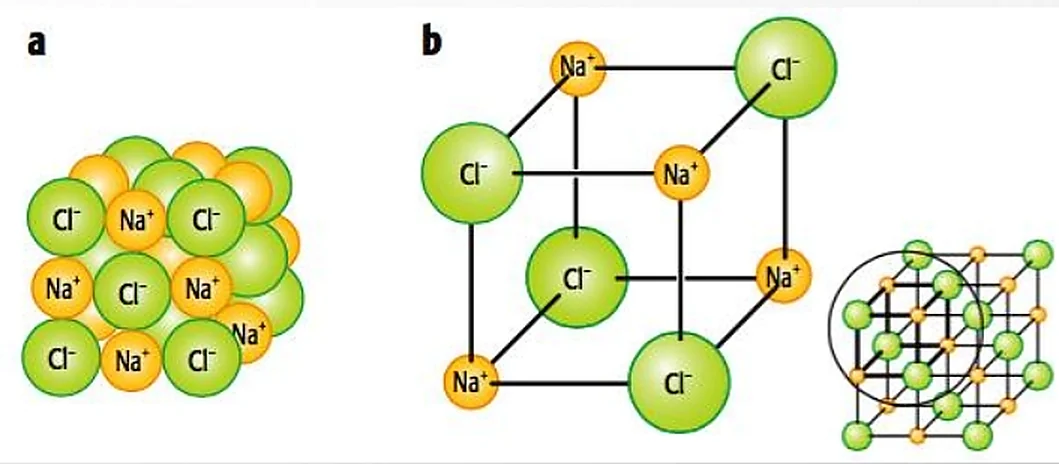
Examples: NaCl, MgO, CaF2. Large difference in electronegativity required (typically > 1.7).
3.3 Covalent and Coordinate Bonding
- σ bond: head-on orbital overlap; first bond in a pair.
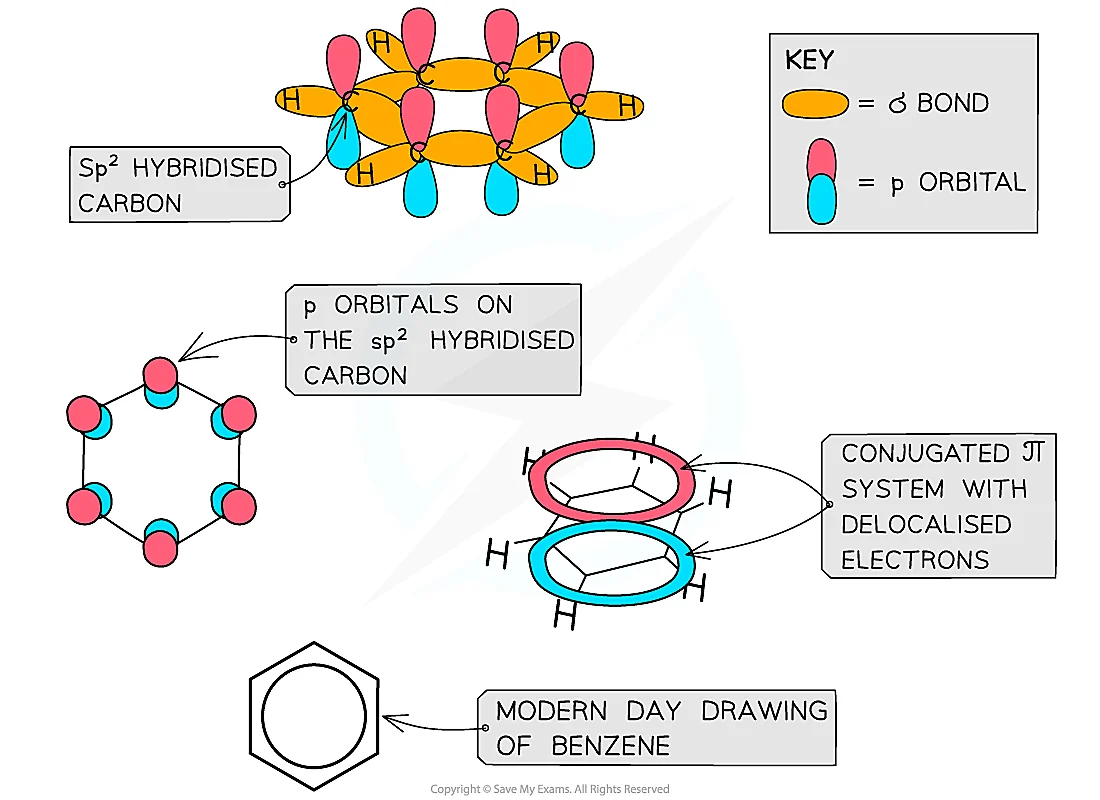
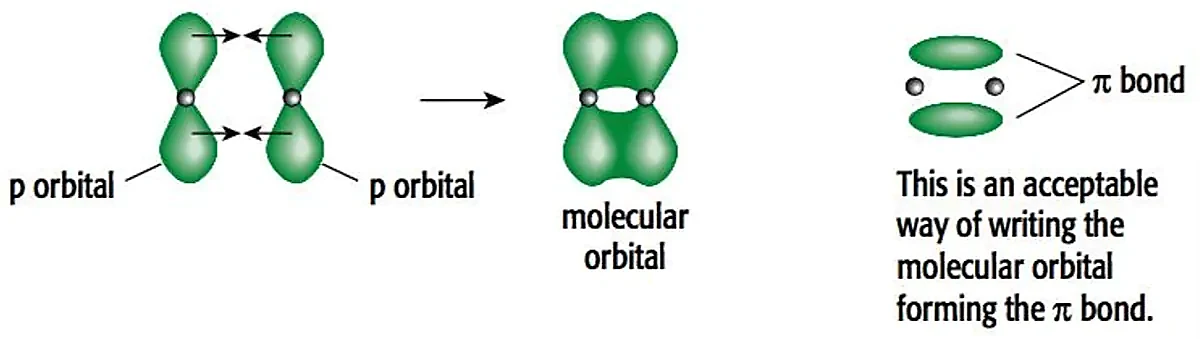
- π bond: sideways overlap of adjacent p orbitals; second/third bond in C=C, C≡C, C=O.
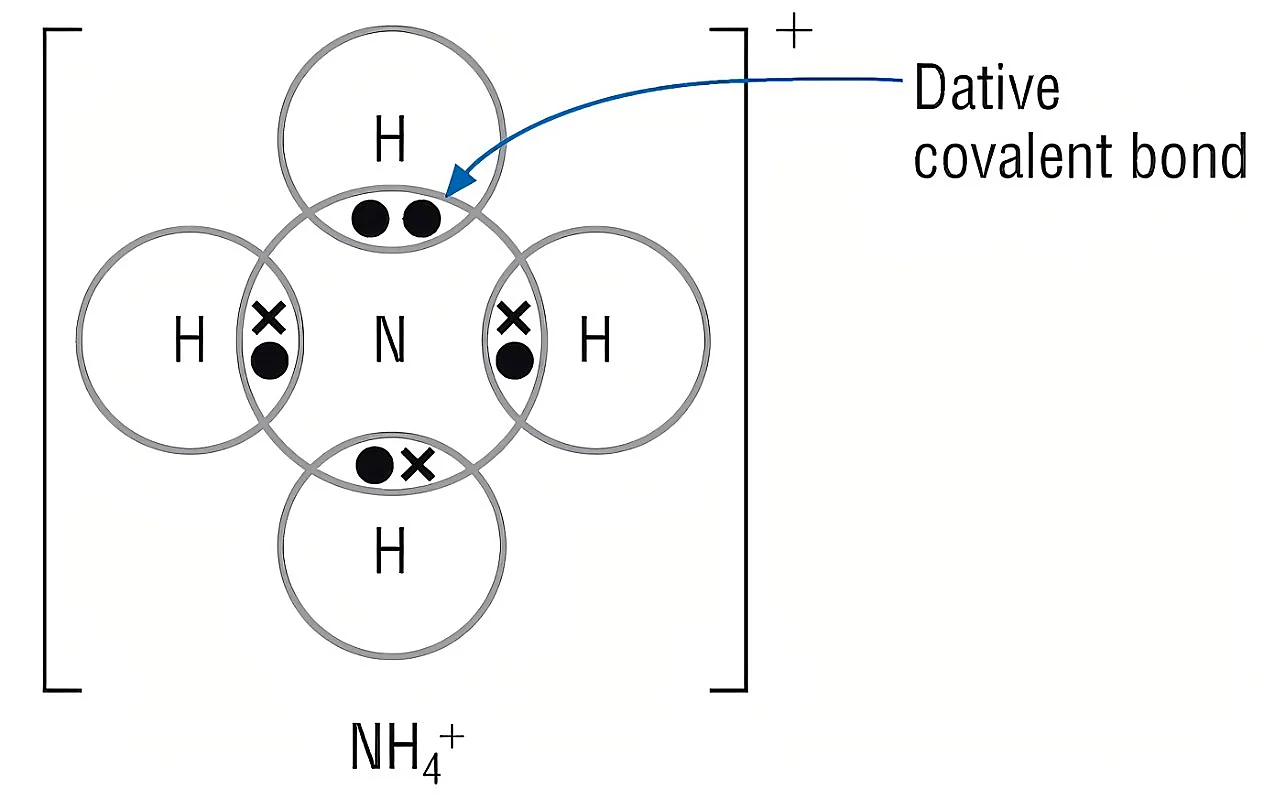
- Coordinate (dative) bond: both electrons supplied by one atom (e.g. NH4+, Al2Cl6, NH3→BF3). Identical in strength once formed.
Period 3 and below can expand the octet (use d orbitals), giving SO3, PCl5, SF6.
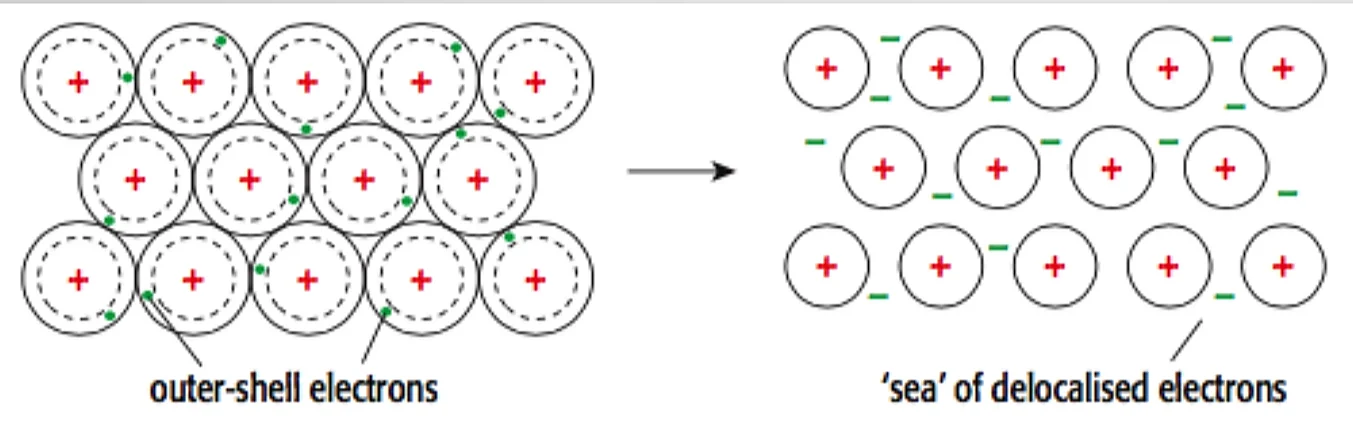
3.4 Metallic Bonding
Explains malleability, ductility, high mp/bp and electrical conductivity.
3.5 VSEPR Shapes
| Molecule | Shape | Bond angle |
|---|---|---|
| BF3 | Trigonal planar | 120° |
| CO2 | Linear | 180° |
| CH4 | Tetrahedral | 109.5° |
| NH3 | Pyramidal | 107° |
| H2O | Bent / non-linear | 104.5° |
| PF5 | Trigonal bipyramidal | 90° & 120° |
| SF6 | Octahedral | 90° |
Lone pairs repel more than bonding pairs — reduce bond angle (NH3 107°, H2O 104.5°).
3.6 Intermolecular Forces
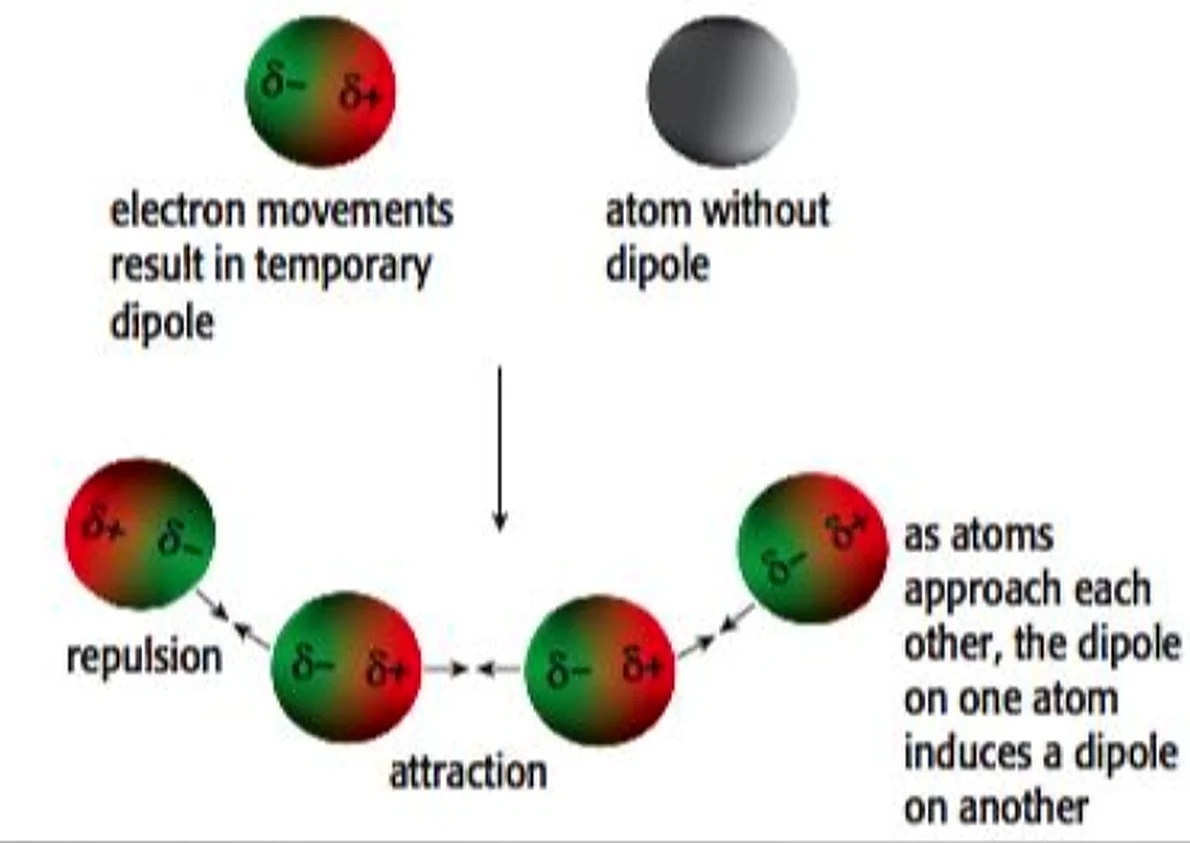
- id-id (induced dipole - induced dipole / London): present in all molecules; strength ↑ with electron count / surface area.
- pd-pd (permanent dipole - permanent dipole): between polar molecules with net dipole moment.
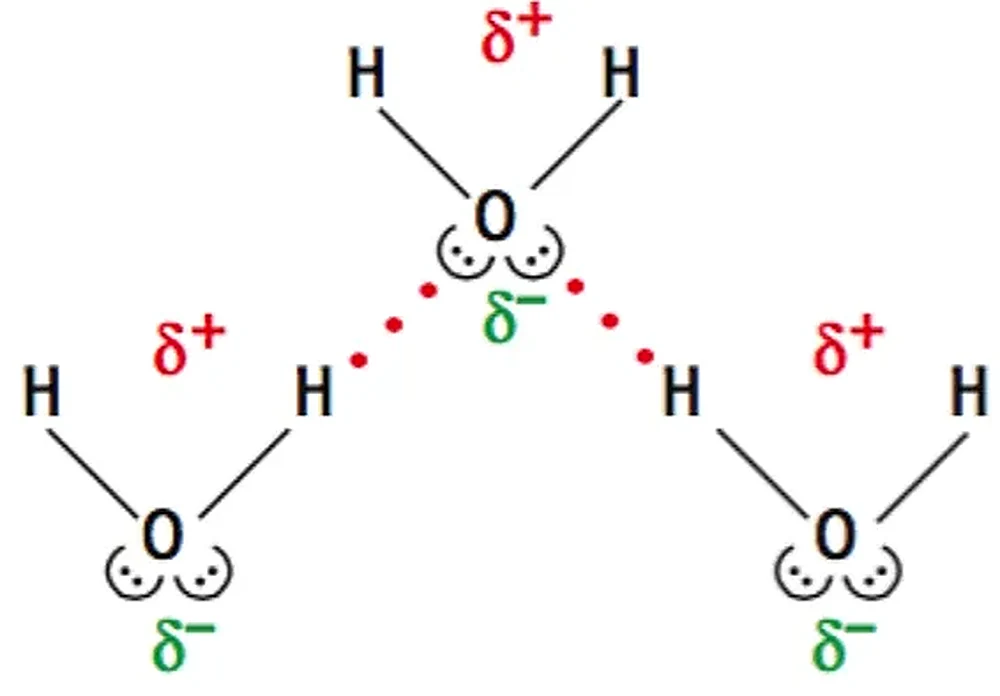
- Hydrogen bonding: H bonded to N, O or F + lone pair on N/O/F of another molecule. Strongest intermolecular force.
3.7 σ and π Bonds; Hybridisation
A σ bond is end-on overlap of orbitals on the internuclear axis. A π bond is sideways overlap of p orbitals. H2 is σ only; C2H4 is one σ + one π; N2 and HCN have a triple bond (one σ + two π).
sp3 (tetrahedral, 109.5°) in CH4 and C2H6; sp2 (120°) in C2H4; sp (180°) in HCN and C2H2.
3.8 Expanded Octet and Dative Bonds
Period 3 can expand the octet: SO2, PCl5, SF6. A dative (coordinate) bond is a shared pair provided by one atom: NH3 + HCl → NH4+; Al2Cl6 is two AlCl3 units linked by dative bonds from Cl to Al.
4States of Matter
4.1 The Ideal Gas
Assumptions: negligible molecular volume, no intermolecular forces, elastic collisions, random motion. Real gases deviate at high pressure / low temperature.
4.2 Lattice Types
| Type | Example | mp/bp | Conductivity |
|---|---|---|---|
| Giant ionic | NaCl, MgO | High | Only molten/aqueous |
| Simple molecular | I2, C60, ice | Low | None |
| Giant covalent | SiO2, diamond, graphite | Very high | None (graphite conducts) |
| Giant metallic | Cu, Mg | High | Solid & molten |
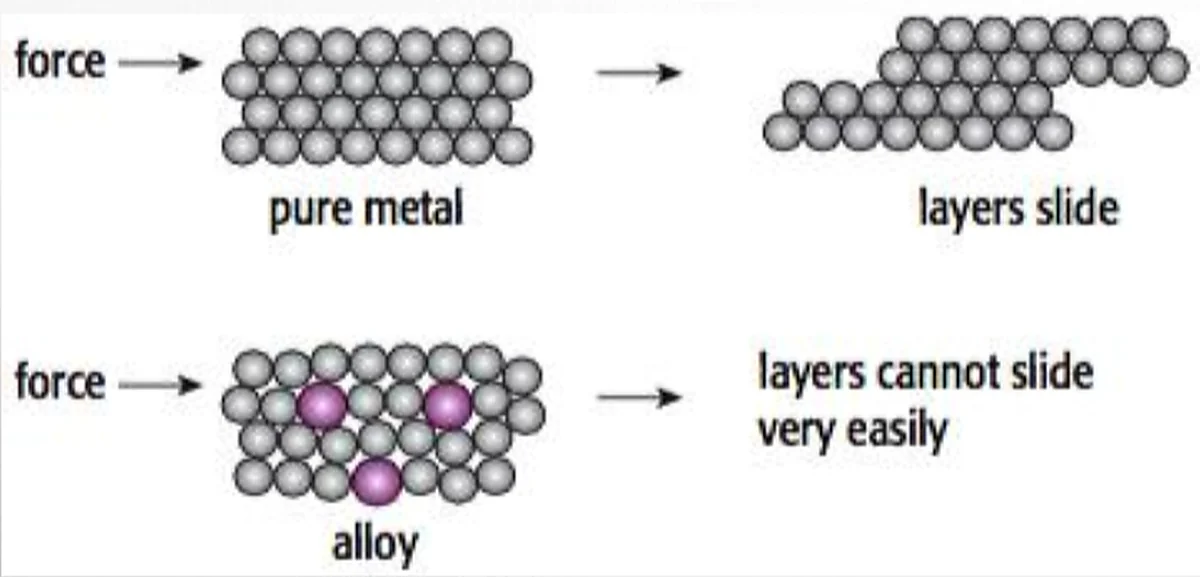
4.3 Allotropes of Carbon
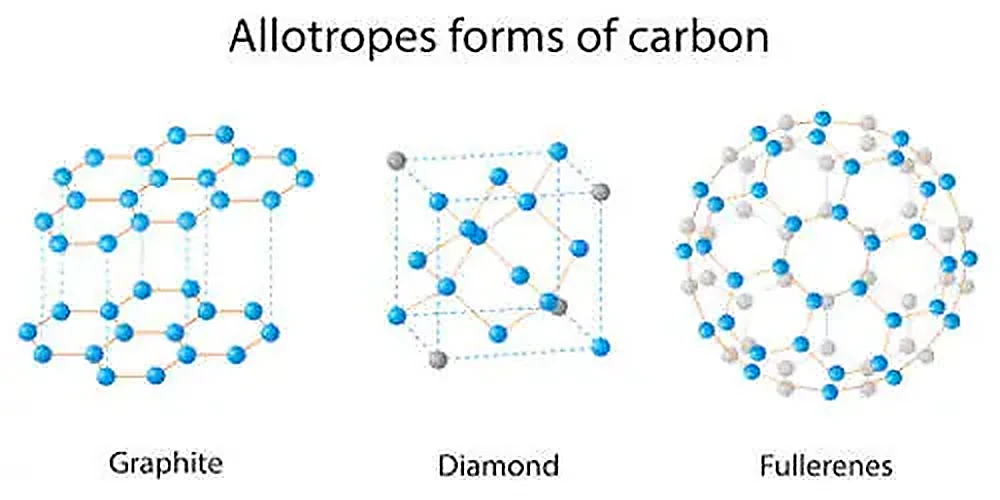
- Diamond: sp3, four σ C-C bonds per atom, tetrahedral. Very hard, non-conductor.
- Graphite: sp2, layers of hexagonal rings; delocalised π electrons — conducts along layers; layers slide — lubricant.
- Buckminsterfullerene (C...): simple molecular sphere; held by id-id forces; low mp.
4.4 Ideal and Real Gases
Real gases deviate at high pressure (finite molecular volume) and low temperature (intermolecular attractions). They behave most ideally at low p and high T.
5Chemical Energetics (AS)
5.1 Enthalpy Change ΔH
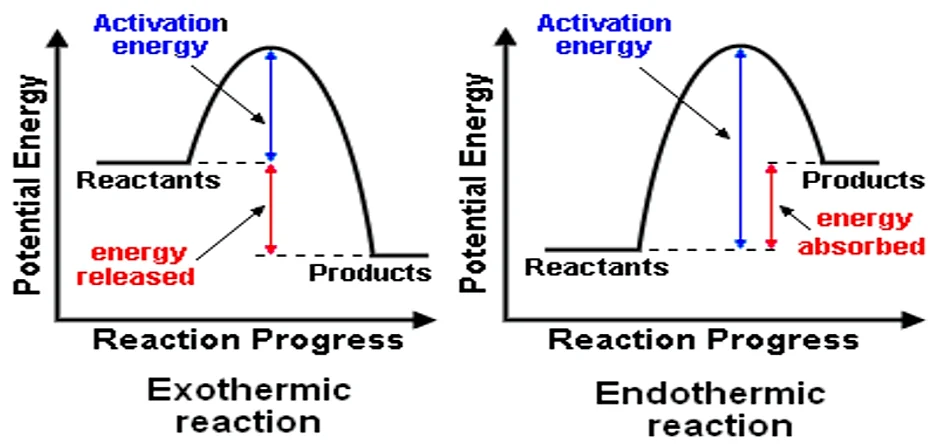
Exothermic: ΔH < 0 (heat released; products lower than reactants). Endothermic: ΔH > 0. Standard conditions: 298 K and 101 kPa, with substances in their standard states.
5.2 Standard Enthalpy Definitions
ΔHc° (combustion): enthalpy change when 1 mole of a substance is completely burned in oxygen under standard conditions.
ΔHneut°: enthalpy change when 1 mole of water is formed by the neutralisation of an acid by an alkali under standard conditions.
ΔHr° (reaction): enthalpy change for a reaction as the equation is written under standard conditions.
5.3 Calorimetry
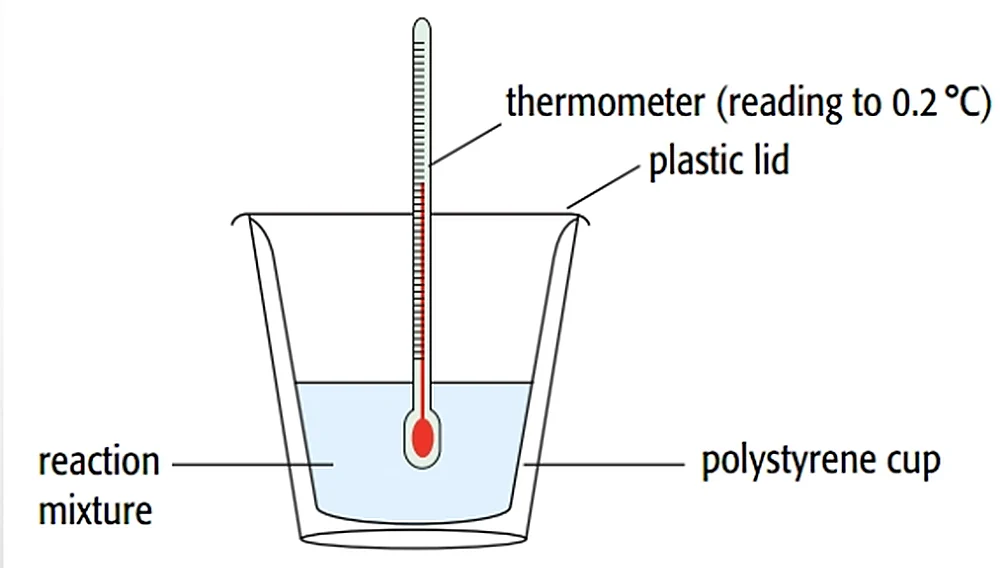
c for water = 4.18 J g−1 K−1. The negative sign converts "heat absorbed by water" to "enthalpy released by reaction".
5.4 Bond Energies
Breaking bonds is endothermic (+); making bonds is exothermic (−). Bond energies are averages, so calculated ΔH is approximate (exact only for gaseous diatomics).
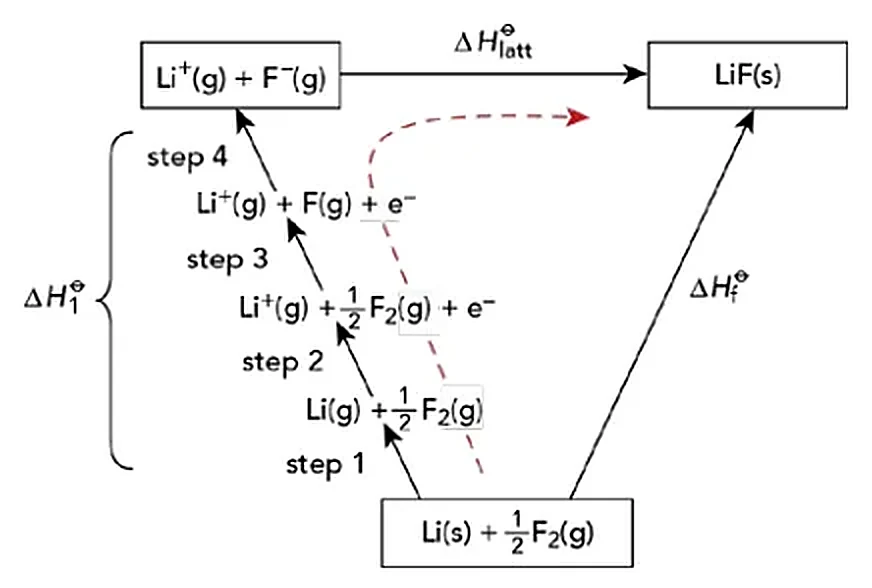
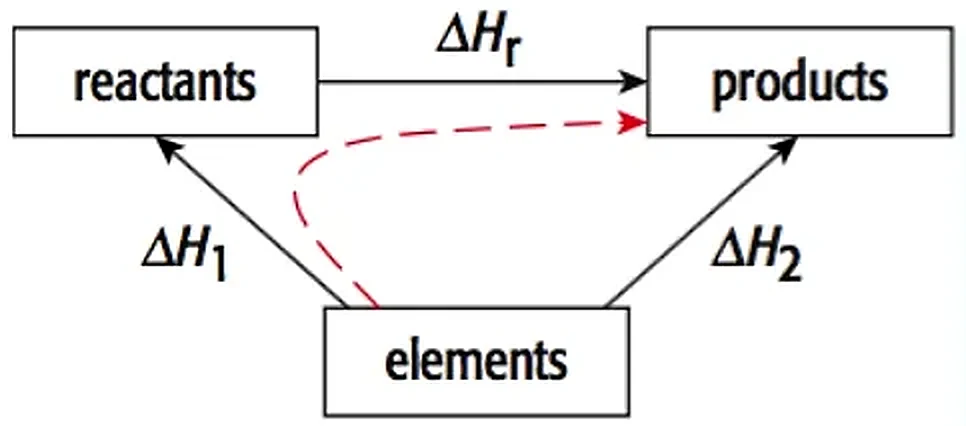
5.5 Hess's Law
5.6 Calorimetry Equation and Standard Conditions
Standard enthalpy changes refer to 101 kPa and a stated temperature, usually 298 K, with standard states. Exothermic ΔH is negative. Average bond energy is the mean enthalpy to break one mole of that bond in the gaseous state.
6Electrochemistry (AS)
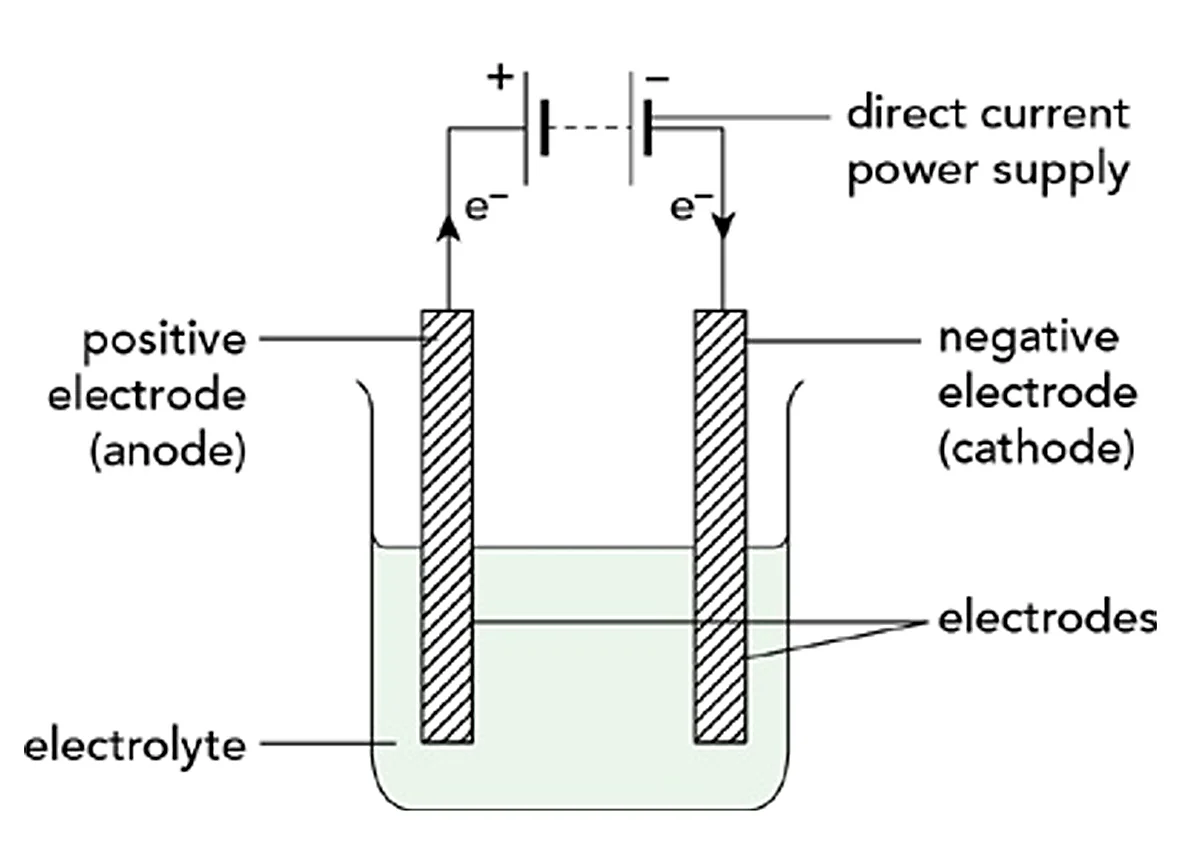
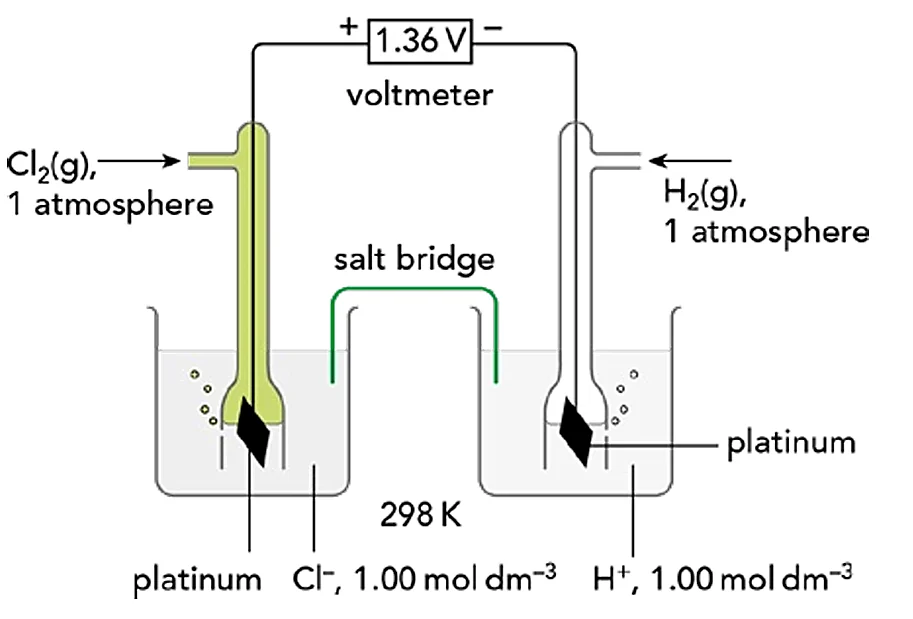
6.1 Redox Definitions
The two always occur together. Older criteria (gain/loss of oxygen or hydrogen) agree with the oxidation-number test when all four can be applied; the oxidation-number test is the one examiners expect.
Disproportionation: the same element is oxidised and reduced in one reaction (Cl2 + cold dilute NaOH). Comproportionation is the reverse: two different oxidation states of one element meet at an intermediate state.
6.2 Oxidation Number Rules
- Uncombined element (including O2, Cl2, S8): 0.
- Group 1 in compounds: +1. Group 2: +2. F: always −1.
- O: usually −2; peroxides −1; OF2 +2.
- H: usually +1; metal hydrides (NaH) −1.
- Monoatomic ion: charge on the ion.
- Sum in a neutral compound is 0; sum in a polyatomic ion equals the ion charge.
- The more electronegative atom takes the negative number.
Use Stock names: iron(II) chloride is FeCl2; chlorate(I) is ClO−; nitrate(V) is NO3−; manganate(VII) is MnO4−. Everyday “nitrate” means nitrate(V).
6.3 Oxidising and Reducing Agents
An oxidising agent accepts electrons and is itself reduced (MnO4−/H+, Cr2O72−/H+, Cl2, conc. H2SO4, O2). A reducing agent donates electrons and is itself oxidised (I−, Fe2+, H2, C, reactive metals, SO2).
H2O2 is in the intermediate O(−1) state: it oxidises when oxygen goes to −2 (extra water formed) and reduces when O2 is produced.
Worked example
MnO4− + 5Fe2+ + 8H+ → Mn2+ + 5Fe3+ + 4H2O.Mn +7 → +2 (reduced; MnO4− is the oxidant). Fe +2 → +3 (oxidised; Fe2+ is the reductant). The titration is self-indicating: first permanent pale pink is the end-point.
6.4 Balancing Redox Equations
Use this order in acid: balance the redox element; add H2O for O; add H+ for H; add e− for charge; multiply halves so electrons cancel; never leave free electrons in the overall equation.
- MnO4− → Mn2+ needs 4H2O on the right, 8H+ on the left, then 5e− on the left.
- Fe2+ → Fe3+ + e−. Multiply by 5 and add.
- Check atoms and total charge on both sides.
In alkali, add OH− to both sides to convert leftover H+ into water. Concentrated H2SO4 oxidises Br− to Br2 and is reduced to SO2 — so it cannot be used to dry HBr.
7Equilibria (AS)
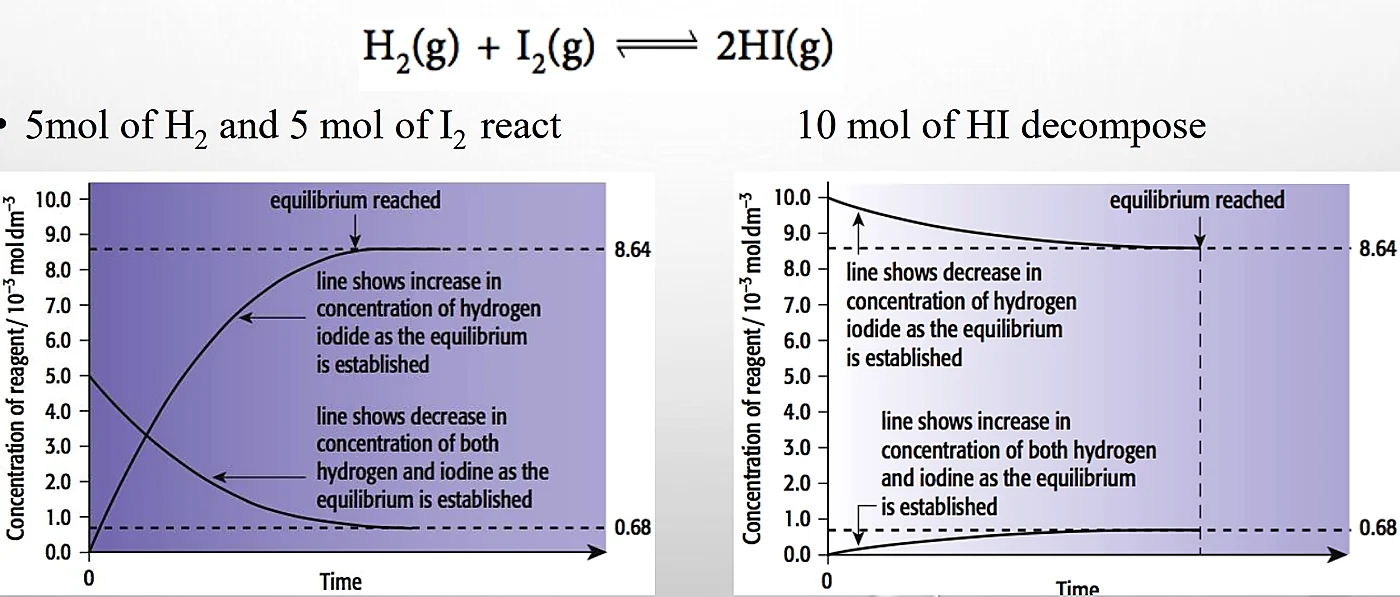
7.1 Dynamic Equilibrium
Forward and reverse rates equal; concentrations of all species constant; requires a closed system. Approached from either side.
7.2 Le Chatelier's Principle
| Disturbance | Position shifts to… |
|---|---|
| ↑ reactant concentration | products (right) |
| ↑ temperature | endothermic side |
| ↑ pressure | side with fewer moles of gas |
| Catalyst | no shift; equilibrium reached faster |
7.3 Kc and Kp
For aA + bB ⇌ cC + dD:
Partial pressure: p = mole fraction × total pressure. Only temperature changes K. Solids and pure liquids are omitted.
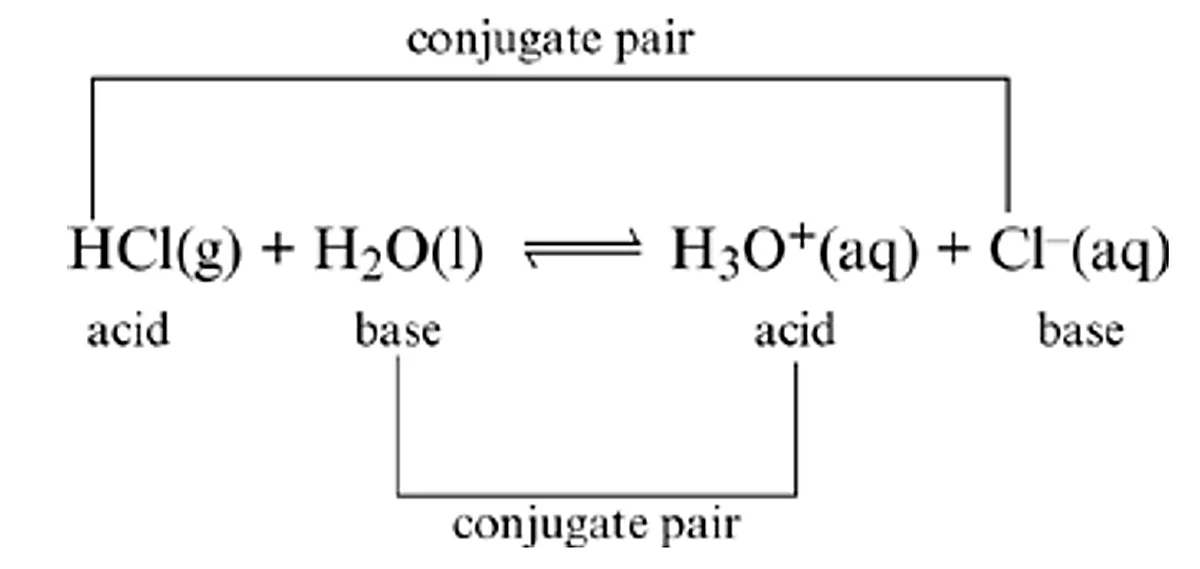
7.4 Brønsted-Lowry Acids and Bases
Conjugate pairs differ by one H+. Strong acids/bases fully dissociate; weak ones partially. Indicator choice: pKa of indicator must lie in the vertical region of the titration curve.
7.5 Industrial Processes
- Haber: N2 + 3H2 ⇌ 2NH3 (ΔH negative). Compromise 400 °C, 200 atm, Fe catalyst.
- Contact: 2SO2 + O2 ⇌ 2SO3, V2O5, 450 °C, 1-2 atm.
7.6 Writing Kc and Kp
Kc uses equilibrium concentrations; Kp uses partial pressures (mole fraction × total pressure). Pure solids and liquids do not appear. K changes only with temperature. A catalyst does not change K — it shortens the time to reach the same position.
8Reaction Kinetics (AS)
8.1 Collision Theory
Molecules must collide with energy ≥ Ea and the correct orientation.
8.2 Boltzmann Distribution
Shows the distribution of molecular energies. Area to the right of Ea = fraction with enough energy.
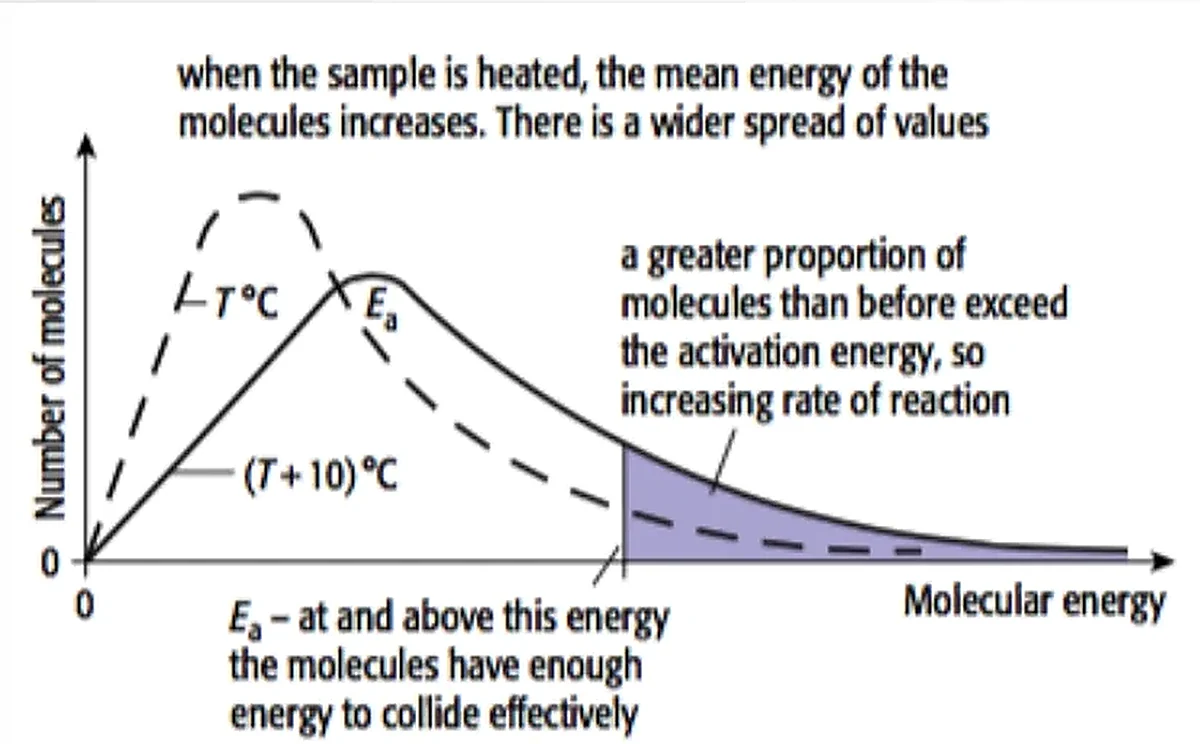
- ↑ Temperature: curve flattens and shifts right — much larger fraction exceeds Ea — rate increases sharply.
- ↑ Concentration / pressure: more collisions per second.
- ↑ Surface area: more sites for collision.
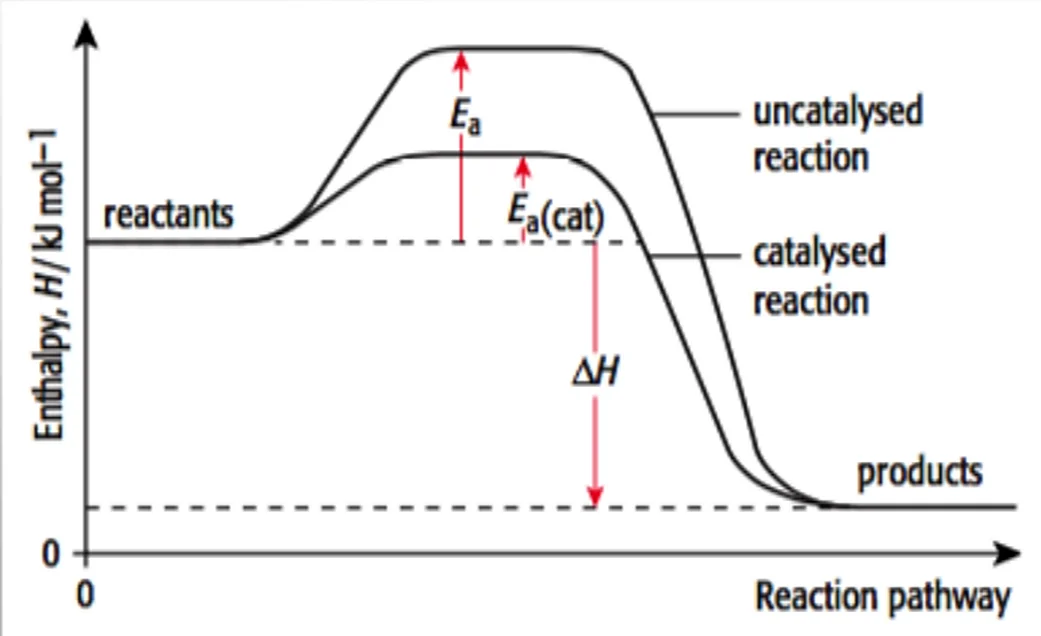
- Catalyst: provides alternative pathway with lower Ea — larger fraction exceeds new Ea.
8.3 Catalysts
A catalyst provides an alternative route with lower Ea. On a Boltzmann diagram, more molecules then exceed the new Ea. Draw the catalysed profile as a lower peak (sometimes two peaks if there is an intermediate). The catalyst is regenerated.
- Homogeneous — same phase as the reactants (e.g. Fe2+/Fe3+ in I−/S2O82−).
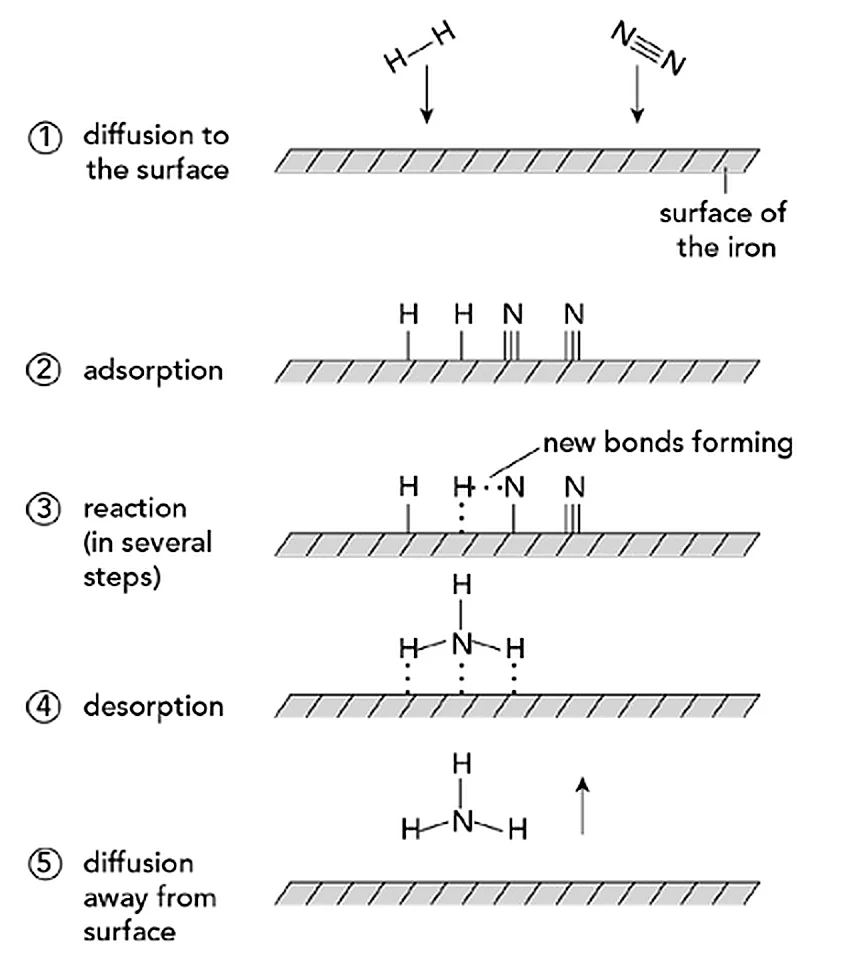
- Heterogeneous — different phase, usually a solid surface (Haber Fe; Contact V2O5).
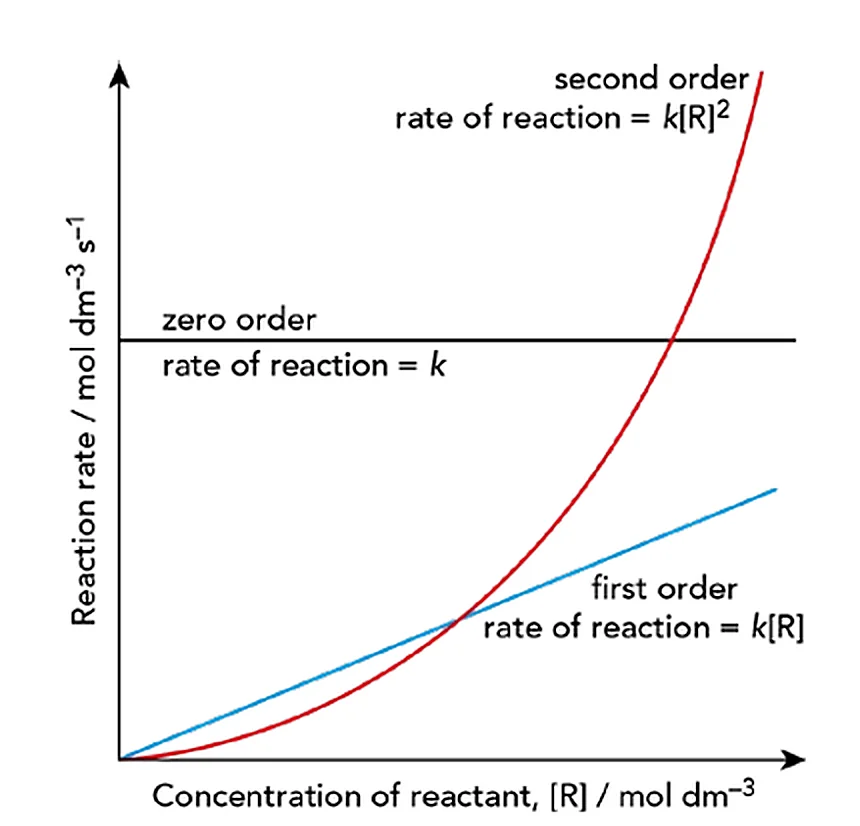
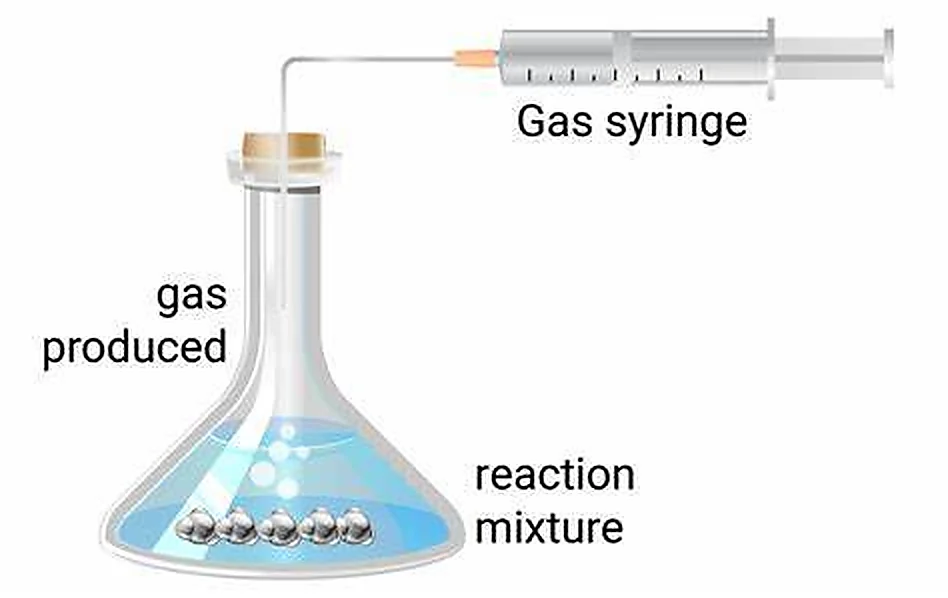
Rate is change of concentration per unit time. From a concentration–time graph, gradient at a point is the instantaneous rate; use initial rate for comparing conditions.
9Chemical Periodicity (Period 3)
9.1 Physical Trends Na → Ar
- Atomic radius decreases (↑ nuclear charge, ~constant shielding).
- Melting point: Na < Mg < Al (stronger metallic bond, more delocalised e−); Si highest (giant covalent); then drop to simple molecular P4, S8, Cl2, Ar — S8 > P4 because of the larger molecule.
- Electrical conductivity: Na < Mg < Al (more delocalised e−); Si semiconductor; non-metals do not conduct.
9.2 Elements with Oxygen and Water
Na, Mg, Al — ionic oxides; Si — giant covalent oxide; P, S — simple molecular acidic oxides.
| Element | Oxide formula | Reaction with water | pH |
|---|---|---|---|
| Na | Na2O | Na2O + H2O → 2NaOH | ~13 |
| Mg | MgO | Slow; Mg(OH)2 slightly soluble | ~9 |
| Al | Al2O3 | Insoluble; amphoteric | ~7 |
| Si | SiO2 | No reaction | — |
| P | P4O10 | → H3PO4 | ~2 |
| S | SO2 / SO3 | → H2SO3 / H2SO4 | <2 |
9.3 Period 3 Chlorides with Water
NaCl (neutral, dissolves); MgCl2 (slightly acidic); AlCl3 (acidic hydrolysis); SiCl4, PCl5 (vigorous hydrolysis — HCl fumes + acidic oxoacid).
9.4 Period 3 Oxides and Chlorides
| Na | Mg | Al | Si | P | S | |
|---|---|---|---|---|---|---|
| Oxide | Na2O | MgO | Al2O3 | SiO2 | P4O10 | SO2/SO3 |
| Bonding | ionic | ionic | ionic/covalent | giant covalent | simple covalent | simple covalent |
| Oxide + water | strong alkali | weak alkali | insoluble | insoluble | strong acid | strong acid |
| Chloride + water | neutral pH~7 | slightly acidic | acidic (fumes) | acidic | acidic | — |
Al2O3 and Al(OH)3 are amphoteric: they dissolve in both acid and NaOH. Na and Mg react with water; later elements do not. Oxidation numbers of the oxides/chlorides match the number of valence electrons used.
10Group 2
10.1 Reactivity Trends Mg → Ba
Reactivity increases down the group because atomic radius increases, so the 2 outer electrons are more easily lost.
- + O2 → MO (Ba forms peroxide BaO2).
- + H2O → M(OH)2 + H2 (vigour increases down group; Mg slow with cold water, fast with steam → MgO).
- + dilute acids → M2+ salt + H2.
10.2 Solubility Trends
| Compound | Trend |
|---|---|
| Hydroxides M(OH)2 | Solubility increases Mg → Ba |
| Sulfates MSO4 | Solubility decreases Mg → Ba (BaSO4 insoluble — basis of sulfate test) |
10.3 Thermal Stability
Stability of carbonates and nitrates increases down the group.
Explanation: larger cation has lower charge density — less polarising effect on the anion — harder to distort and decompose.
10.4 Reactions to Recall
Mg → Ba react with O2, water (Mg needs steam) and dilute HCl/H2SO4 to give H2. Oxides, hydroxides and carbonates all react with dilute acid to give a salt + water (+ CO2 from carbonates). Hydroxide solubility increases down the group; sulfate solubility decreases. Thermal stability of carbonates and nitrates increases down the group (larger cation, less polarising).
11Group 17 (Halogens)
11.1 Physical Properties Cl2 → I2
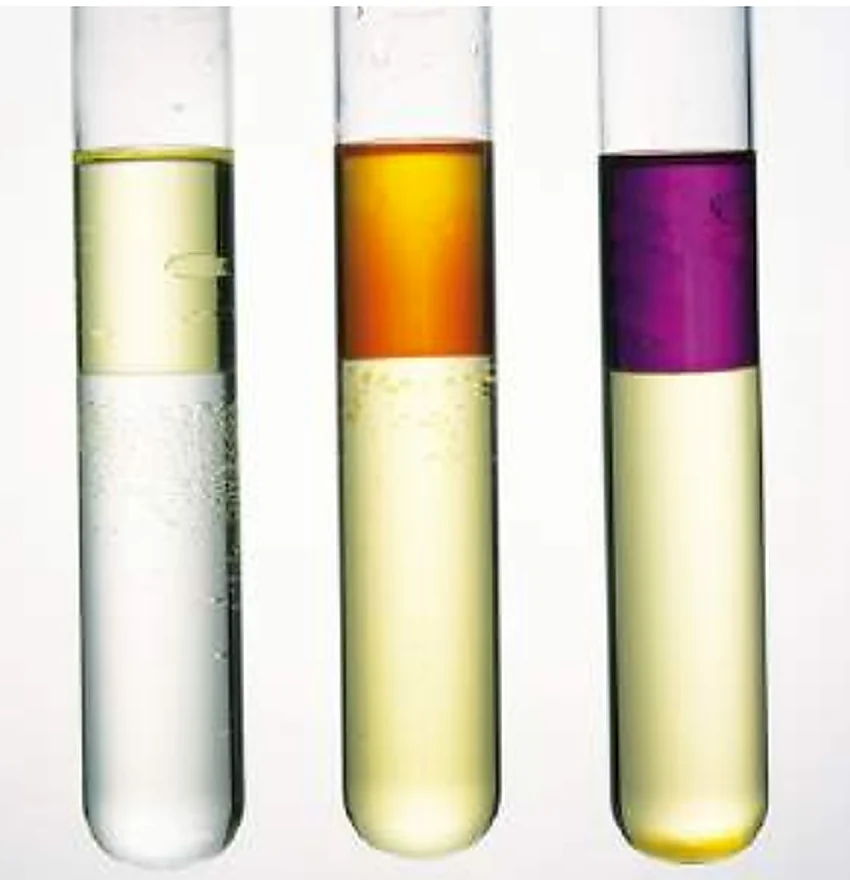
- Colour: Cl2 pale green gas, Br2 orange-brown liquid, I2 grey-black solid (purple vapour).
- Volatility decreases down the group (stronger id-id forces as electron count increases).
- Bond energy Cl-Cl > Br-Br > I-I (longer bond — weaker overlap).
11.2 Halogens as Oxidising Agents
Strength: Cl2 > Br2 > I2. Cl2 displaces Br2 and I2; Br2 displaces only I2.
11.3 Halide Ions as Reducing Agents
Strength: I− > Br− > Cl−. With conc. H2SO4:
- NaCl + H2SO4 → NaHSO4 + HCl (steamy fumes; no further reduction).
- NaBr → HBr; HBr reduces some H2SO4 → Br2 + SO2.
- NaI → HI; HI reduces H2SO4 further → I2, then H2S, S (yellow solid, smell of rotten egg).
11.4 AgNO3 Test for Halides
| Halide | AgNO3 precipitate | Solubility |
|---|---|---|
| Cl− | White | Soluble in dilute NH3 |
| Br− | Cream | Soluble in conc. NH3 |
| I− | Pale yellow | Insoluble in NH3 |
11.5 Disproportionation of Chlorine
Water purification: Cl2 + H2O ⇌ HCl + HOCl. HOCl kills bacteria.
11.6 Hydrogen Halides and Concentrated H2SO4
Thermal stability of HX decreases I > Br > Cl because the H–X bond weakens. Concentrated H2SO4 on solid halides: Cl− gives HCl only; Br− is oxidised to Br2 (brown, SO2); I− is oxidised to I2 (purple vapour, H2S / S). This is the halide-as-reducing-agent trend.
12Nitrogen and Sulfur
12.1 Inertness of N2
N≡N triple bond has bond energy 944 kJ mol−1; non-polar. Requires high energy/catalyst to react.
12.2 Ammonia as a Base
NH3 + H+ → NH4+ (lone pair on N accepts proton; coordinate bond formed). NH3 + H2O ⇌ NH4+ + OH− (weak base).
12.3 NOx in the Atmosphere
- Formed by lightning and in internal-combustion engines: N2 + O2 → 2NO at high temperature; 2NO + O2 → 2NO2.
- NO catalyses oxidation of SO2: NO + ½O2 → NO2; NO2 + SO2 → NO + SO3 — contributes to acid rain.
- Catalytic converter (Pt/Rh): 2NO + 2CO → N2 + 2CO2.
12.4 Acid Rain
SO2 + H2O → H2SO3; SO3 + H2O → H2SO4. Effects: damages plants, corrodes limestone and metal; treated by flue-gas desulfurisation with CaO/CaCO3.
12.5 Haber and Contact Processes
Haber: N2 + 3H2 ⇌ 2NH3, Fe catalyst, ~450 °C, ~200 atm. Contact: 2SO2 + O2 ⇌ 2SO3, V2O5, ~450 °C, ~1–2 atm; SO3 is dissolved in conc. H2SO4 then diluted (never add SO3 straight to water).
13Introduction to AS Organic Chemistry
13.1 Functional Groups (AS)
Alkene C=C, halogenoalkane C-X, alcohol -OH, aldehyde -CHO, ketone C=O, carboxylic acid -COOH, ester -COO-, amine -NH2, nitrile -CN.
13.2 Nomenclature
IUPAC system. Longest chain — root (meth, eth, prop, but, pent, hex); add prefixes/suffixes; numbers indicate position; lowest locants overall.
13.3 Isomerism
- Structural: chain, positional, functional-group.
- Geometrical (cis/trans, E/Z): restricted rotation around C=C; two different groups on each sp2 C.
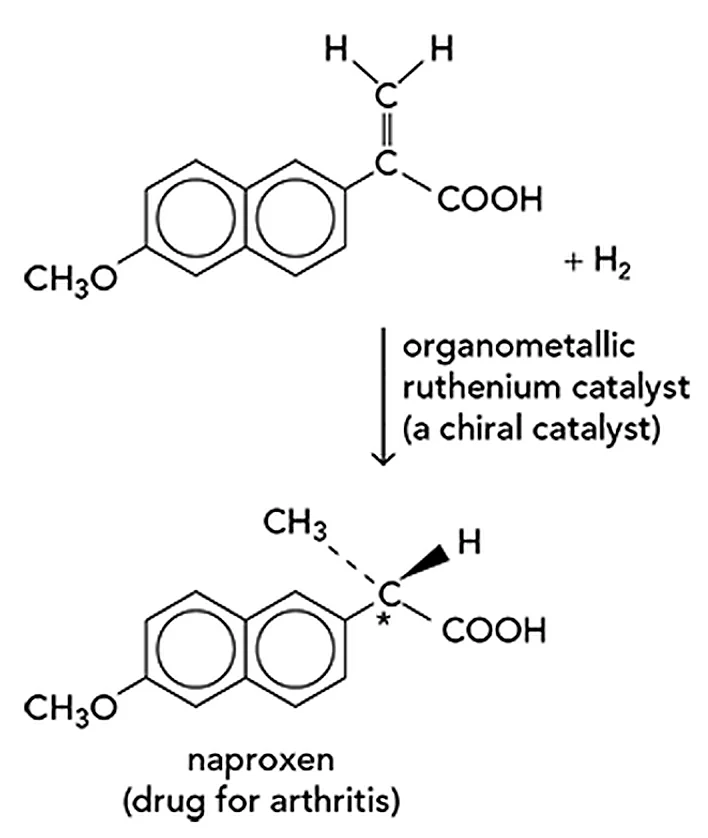
- Optical: chiral C with four different groups — non-superimposable mirror images (enantiomers); rotate plane-polarised light in opposite directions.
13.4 Hybridisation
| Hybrid | Geometry | Angle | Example |
|---|---|---|---|
| sp3 | Tetrahedral | 109.5° | CH4 |
| sp2 | Trigonal planar | 120° | C=C, C=O |
| sp | Linear | 180° | C≡C, C≡N |
13.5 Reaction Types
Addition, substitution (free-radical, SN1, SN2), elimination, hydrolysis, condensation, oxidation, reduction.
13.6 Curly Arrows
Full arrow = movement of a pair of electrons (heterolytic). Half (fish-hook) arrow = movement of one electron (homolytic / radical). Arrow tail starts at a bond or lone pair; head points to where electrons go.
13.7 Stereoisomerism at AS
Cis–trans / E–Z needs a C=C (no rotation) and two different groups on each carbon. Optical isomerism needs a chiral carbon (four different groups); a pair of non-superimposable mirror images rotates plane-polarised light equally in opposite directions.
14Hydrocarbons
14.1 Alkanes
- Unreactive: non-polar, strong C-C and C-H bonds.
- Combustion: complete → CO2 + H2O; incomplete → CO + soot.
- Cracking: thermal (heat + Al2O3) → shorter alkanes + alkenes.
14.2 Free-Radical Substitution with X2/UV
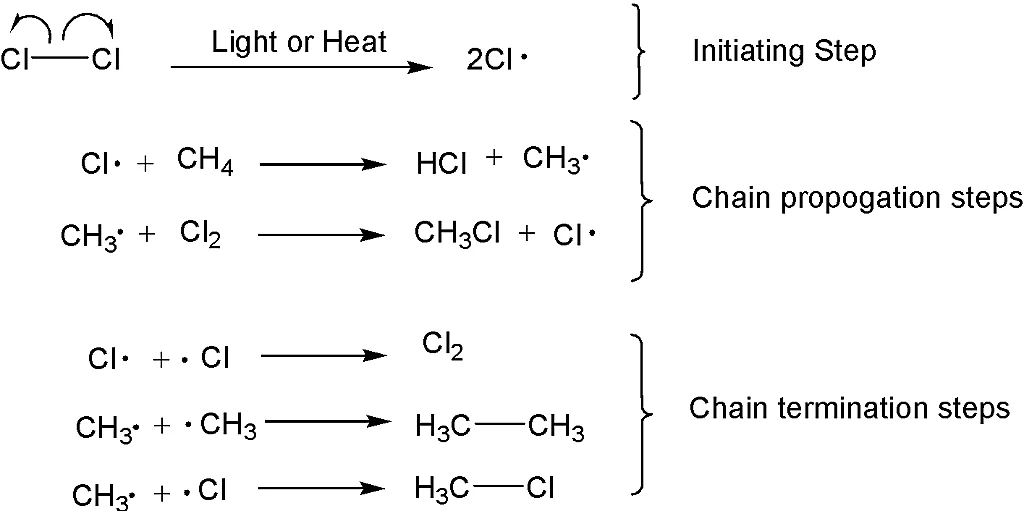
Three stages — write all equations using half-arrows:
- Initiation: Cl2 → 2Cl• (UV)
- Propagation: CH4 + Cl• → CH3• + HCl; CH3• + Cl2 → CH3Cl + Cl•
- Termination: Cl• + Cl• → Cl2; CH3• + Cl• → CH3Cl; 2CH3• → C2H6
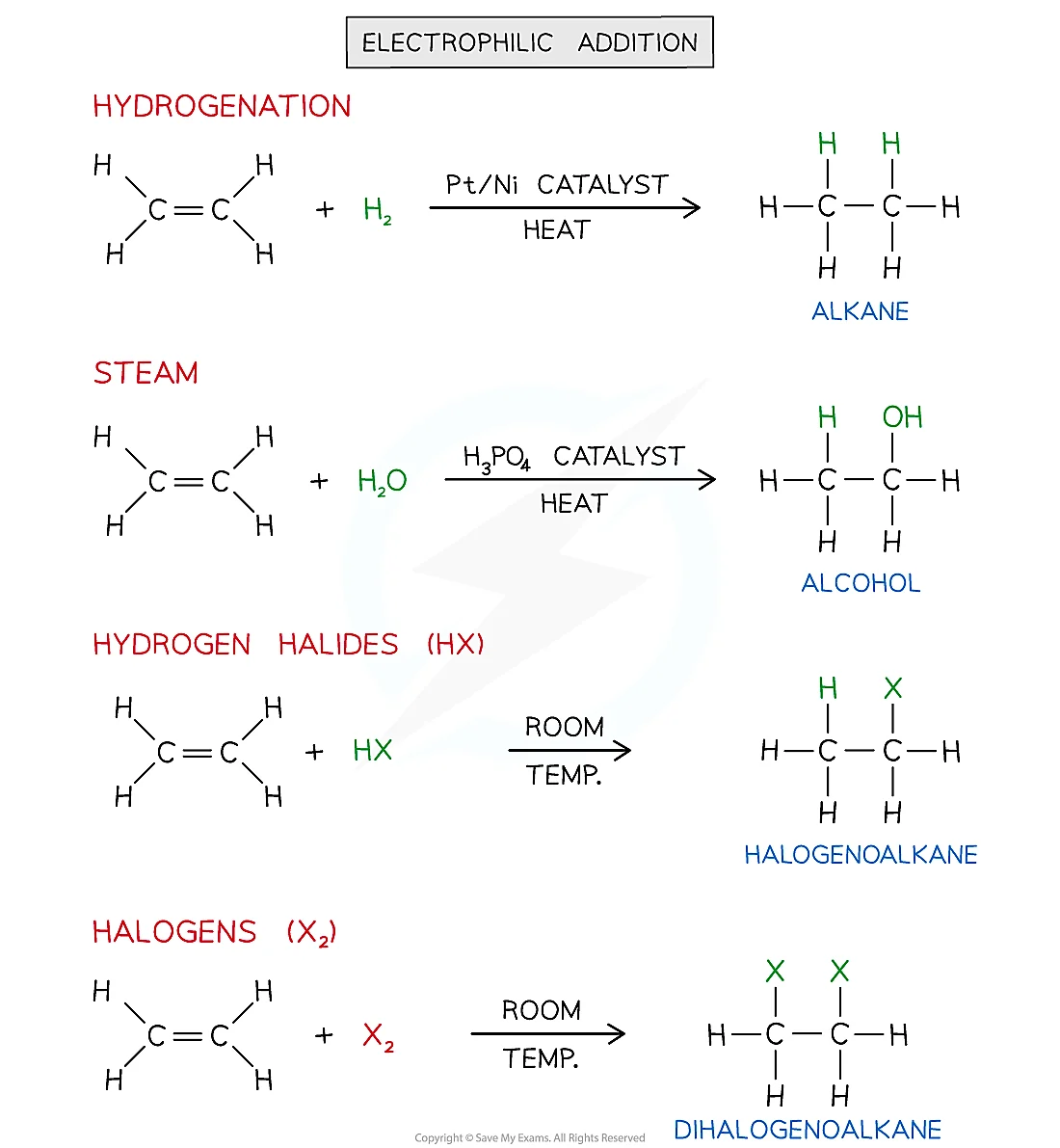
14.3 Alkenes — Electrophilic Addition
| Reagent / conditions | Product |
|---|---|
| H2 / Pt or Ni, heat | Alkane (hydrogenation) |
| Steam / H3PO4, 300 °C, 60 atm | Alcohol |
| HX(g) | Halogenoalkane (Markovnikov) |
| Br2(aq) | Bromohydrin (decolourises — test for C=C) |
| Cold dilute KMnO4 / H+ | Diol (purple → colourless) |
| Hot conc. KMnO4 | Cleaves C=C → carbonyls / CO2 |
14.4 Addition Polymerisation
n CH2=CHX → [−CH2−CHX−]n. Examples: poly(ethene), PVC, polystyrene. Non-biodegradable; toxic on incineration (PVC → HCl).
14.5 Making Alkenes
- Elimination of HX from a halogenoalkane: ethanolic NaOH, heat.
- Dehydration of an alcohol: heated Al2O3 or conc. H2SO4.
- Cracking of a longer alkane over Al2O3.
14.6 Electrophilic Addition — Reagents and Markovnikov
- H2 / Ni or Pt, heat → alkane.
- Steam / H3PO4 → alcohol.
- HX(g), r.t. → halogenoalkane. The H adds to the carbon already having more H (more stable 2°/3° carbocation; alkyl groups are electron-releasing).
- X2 → dihalogenoalkane. Br2(aq) decolorised is the C=C test.
- Cold dilute acidified KMnO4 → diol (purple to colourless).
- Hot concentrated acidified KMnO4 cleaves the C=C; the fragments tell you where the double bond was.
14.7 Alkanes — Combustion and Cracking
Alkanes are unreactive to polar reagents (strong, non-polar C–H). Incomplete combustion gives CO and C. Catalytic converters remove CO, NOx and unburnt hydrocarbons. Cracking heavier fractions gives more useful shorter alkanes and alkenes.
15Halogen Compounds
15.1 Key Reactions
| Reagent / conditions | Product | Type |
|---|---|---|
| NaOH(aq) / heat | Alcohol | Nucleophilic substitution |
| KCN in ethanol / heat | Nitrile (chain +1 C) | Nucleophilic substitution |
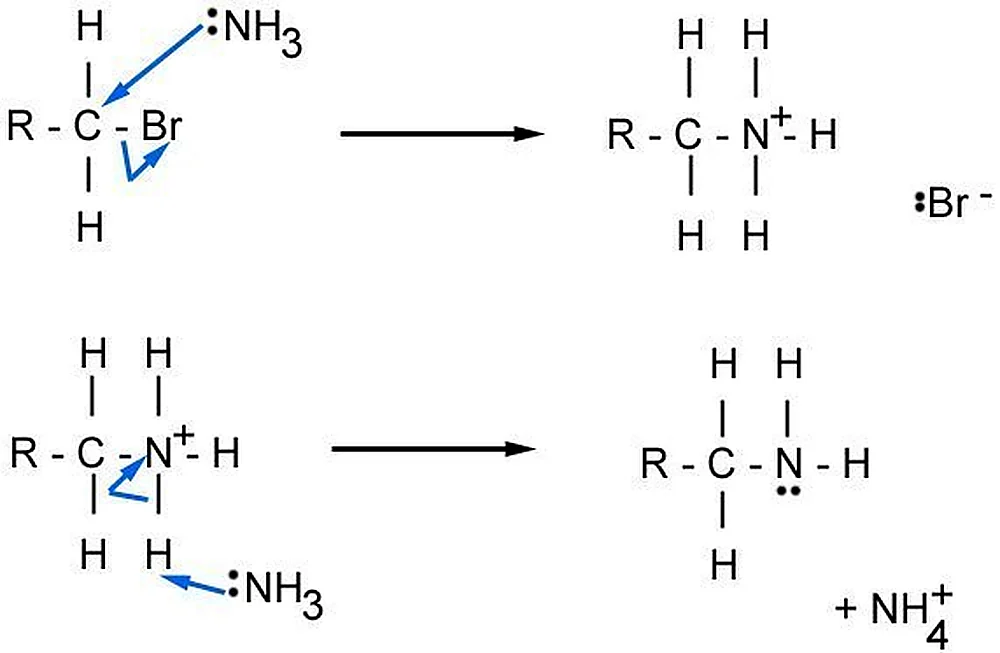
| NH3 in ethanol / heat + pressure | Primary amine | Nucleophilic substitution |
| NaOH in ethanol / heat | Alkene | Elimination |
| AgNO3 in ethanol / warm | Identification by AgX colour | — |
15.2 SN1 vs SN2
- SN1: two steps; rate = k[RX]; carbocation intermediate; tertiary preferred (more stable cation).
- SN2: one step; rate = k[RX][Nu−]; backside attack; primary preferred (less steric hindrance).
- Secondary: mixture.
15.3 C-X Reactivity
C-I (weakest, longest) > C-Br > C-Cl > C-F. AgNO3/ethanol test: yellow AgI ppt forms fastest; AgCl white ppt slowest; AgF none.
15.4 Nucleophilic Substitution — Reagents
- NaOH(aq), heat → alcohol.
- KCN in ethanol, heat → nitrile (one extra carbon).
- NH3 in ethanol, heat under pressure → amine.
- AgNO3(aq) in ethanol: rate of AgX ppt identifies the halogen (C–I fastest, weakest bond).
Ethanolic NaOH, heat → elimination to an alkene. Primary halogenoalkanes favour SN2; tertiary favour SN1.
16Hydroxy Compounds (Alcohols)
16.1 Classification
- Primary (1°): -CH2OH (e.g. ethanol).
- Secondary (2°): -CHOH- (e.g. propan-2-ol).
- Tertiary (3°): -C(R)(R')OH (e.g. 2-methylpropan-2-ol).
16.2 Oxidation
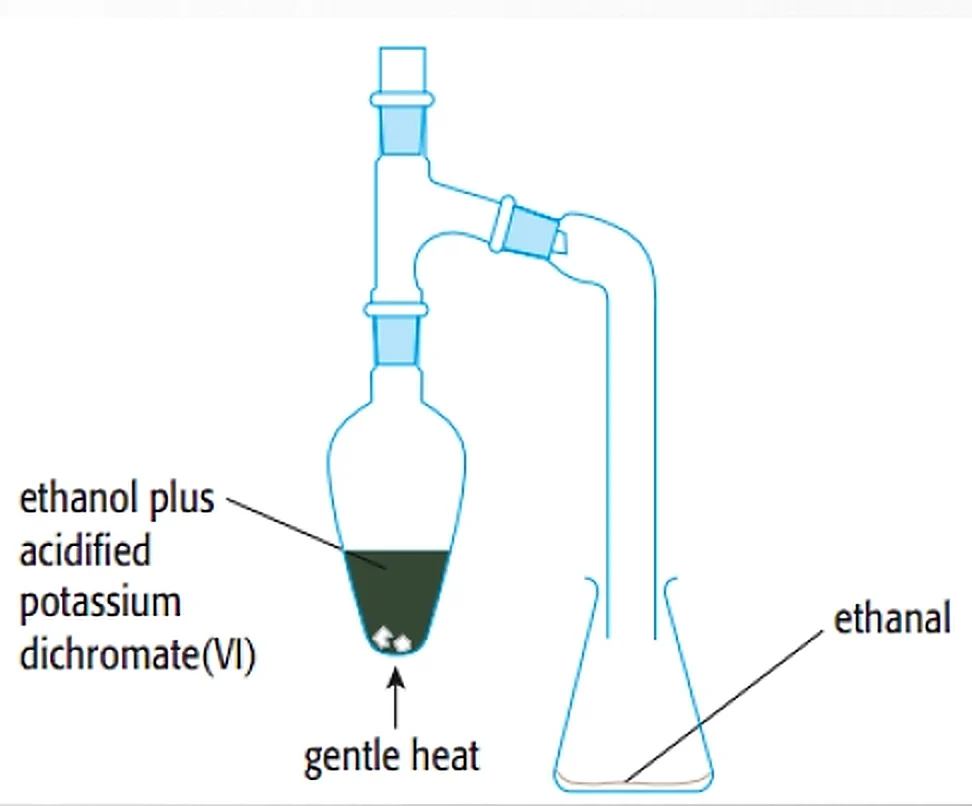
Reagent: K2Cr2O7(aq) / dil. H2SO4 (orange → green) or KMnO4 / H+.
| Alcohol | Distil immediately | Reflux |
|---|---|---|
| Primary | Aldehyde | Carboxylic acid |
| Secondary | Ketone | Ketone (no further oxidation) |
| Tertiary | No reaction — stays orange | No reaction |
16.3 Other Reactions
- Na(s) → sodium alkoxide + ½H2 (slow, less vigorous than water with Na).
- Conversion to halogenoalkane: HX(g); KCl + conc. H2SO4; PCl3 + heat; PCl5; SOCl2.
- Dehydration: conc. H2SO4 at 170 °C, or Al2O3(s) hot → alkene.
- Esterification: + RCOOH / conc. H2SO4 cat. → ester + H2O (reversible).
16.4 Iodoform Test
I2 / NaOH(aq), warm. Yellow precipitate CHI3 (triiodomethane) — presence of CH3CH(OH)- or CH3CO- group.
16.5 Making Alcohols and Further Reactions
Routes: steam + alkene / H3PO4; NaOH(aq) + halogenoalkane; NaBH4 or LiAlH4 on a carbonyl; LiAlH4 on a carboxylic acid; hydrolysis of an ester.
- Na(s) → sodium alkoxide + H2. Alcohols are weaker acids than water.
- PCl5, SOCl2 or HX → halogenoalkane (steamy fumes with PCl5 test the OH).
- Conc. H2SO4 or Al2O3, heat → alkene (dehydration).
- Carboxylic acid + conc. H2SO4 → ester.
- Acidified K2Cr2O7: distill a 1° alcohol to the aldehyde; reflux to the acid. 2° → ketone. 3° no reaction (stays orange).
17Carbonyl Compounds
17.1 Common Reactions
| Reagent | Aldehyde | Ketone |
|---|---|---|
| NaBH4 or LiAlH4 / dry ether | 1° alcohol | 2° alcohol |
| HCN / KCN(cat.) | 2-hydroxynitrile | 2-hydroxynitrile |
| 2,4-DNPH | Orange ppt | Orange ppt |
| Tollens' reagent [Ag(NH3)2]+ | Silver mirror | No reaction |
| Fehling's solution | Brick-red Cu2O ppt | No reaction |
| I2 / NaOH | Yellow CHI3 ppt (only if CH3CHO) | Yellow CHI3 ppt (only if methyl ketone) |
17.2 Mechanism of HCN Addition (Nucleophilic Addition)
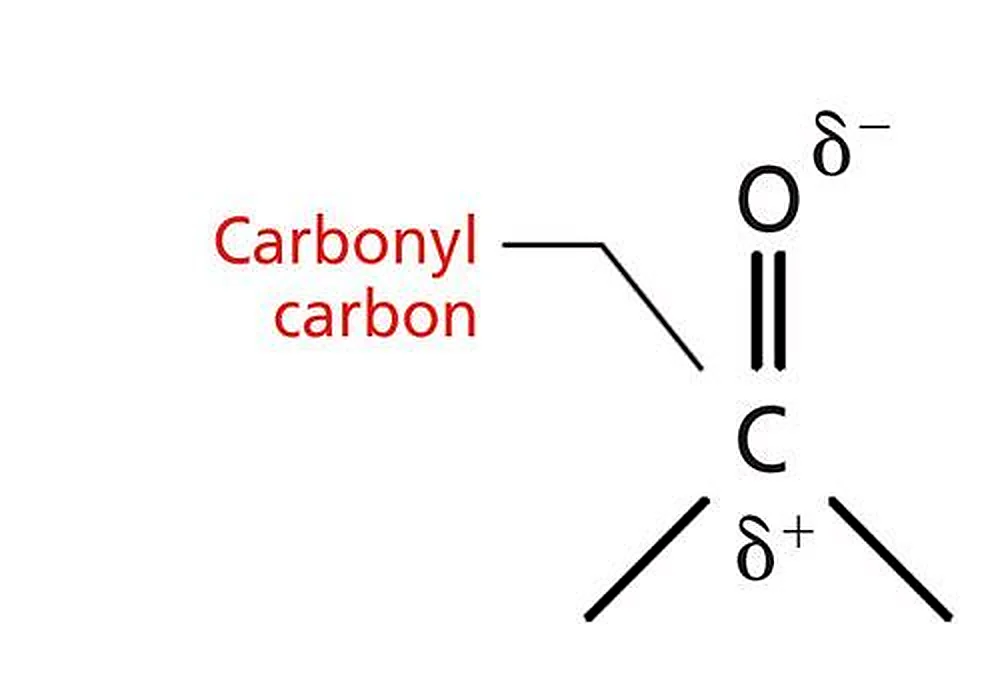
- CN− attacks δ+ carbon of C=O (curly arrow from CN− lone pair to C).
- π electrons of C=O move onto O → alkoxide intermediate.
- H+ (from HCN or H2O) protonates O → 2-hydroxynitrile.
17.3 Distinguishing Tests
- 2,4-DNPH: orange/yellow ppt with any carbonyl (aldehyde or ketone).
- Tollens' (ammoniacal AgNO3, warm): silver mirror with aldehydes only.
- Fehling's / Benedict's: brick-red Cu2O with aliphatic aldehydes.
- Alkaline I2: yellow CHI3 ppt if a CH3CO− or CH3CH(OH)− group is present.
Reduction with NaBH4 or LiAlH4 gives the corresponding alcohol. HCN / KCN, heat gives a hydroxynitrile (nucleophilic addition — extra carbon).
18Carboxylic Acids and Esters
18.1 Structure and Physical Properties
The carboxyl group is −COOH. Methanoic, ethanoic, propanoic acids are the first three. Two molecules dimerise through two hydrogen bonds, so boiling points are higher than alcohols of similar Mr. Short-chain acids mix with water; longer chains do not.
18.2 Reactions of Carboxylic Acids
- Na or Mg → salt + H2.
- NaOH or Na2CO3/NaHCO3 → salt + H2O (+ CO2 with carbonate). Effervescence with carbonate distinguishes them from phenol and alcohols.
- Alcohol + conc. H2SO4 / heat → ester + H2O (reversible).
- LiAlH4 in dry ether, then acid → primary alcohol. NaBH4 does not reduce carboxylic acids.
- PCl5 or SOCl2 → acyl chloride (steamy HCl fumes with PCl5).
18.3 Why They Are Acidic
Stronger than alcohols and phenol because the carboxylate ion is resonance-stabilised: the negative charge is shared equally over both oxygen atoms. Still weak acids: only partially dissociated in water.
18.4 Esters
Named as alkyl alkanoates (CH3COOCH2CH3 is ethyl ethanoate). Pleasant smells; used as solvents and flavourings.
| Hydrolysis | Conditions | Products | Reversible? |
|---|---|---|---|
| Acid | dilute H2SO4, heat | acid + alcohol | Yes — excess water needed |
| Alkali (saponification) | dilute NaOH, heat | carboxylate salt + alcohol | No — salt does not re-esterify |
18.5 Making Carboxylic Acids
- Reflux a 1° alcohol or an aldehyde with acidified K2Cr2O7 / KMnO4.
- Hydrolyse a nitrile (dilute acid, or alkali then acidify).
- Hydrolyse an ester, then acidify if alkali was used.
19Nitrogen Compounds (AS)
19.1 Primary Amines
Amines are derivatives of ammonia in which one or more H atoms are replaced by alkyl or aryl groups. A primary amine has one alkyl/aryl group attached to the nitrogen atom: R-NH2.
Order of base strength: ethylamine > ammonia > phenylamine
- Ethylamine: the ethyl group is electron-donating (+I effect), pushing electron density towards N — lone pair more available — stronger base.
- Ammonia: three H atoms on N; no electron-donating alkyl group.
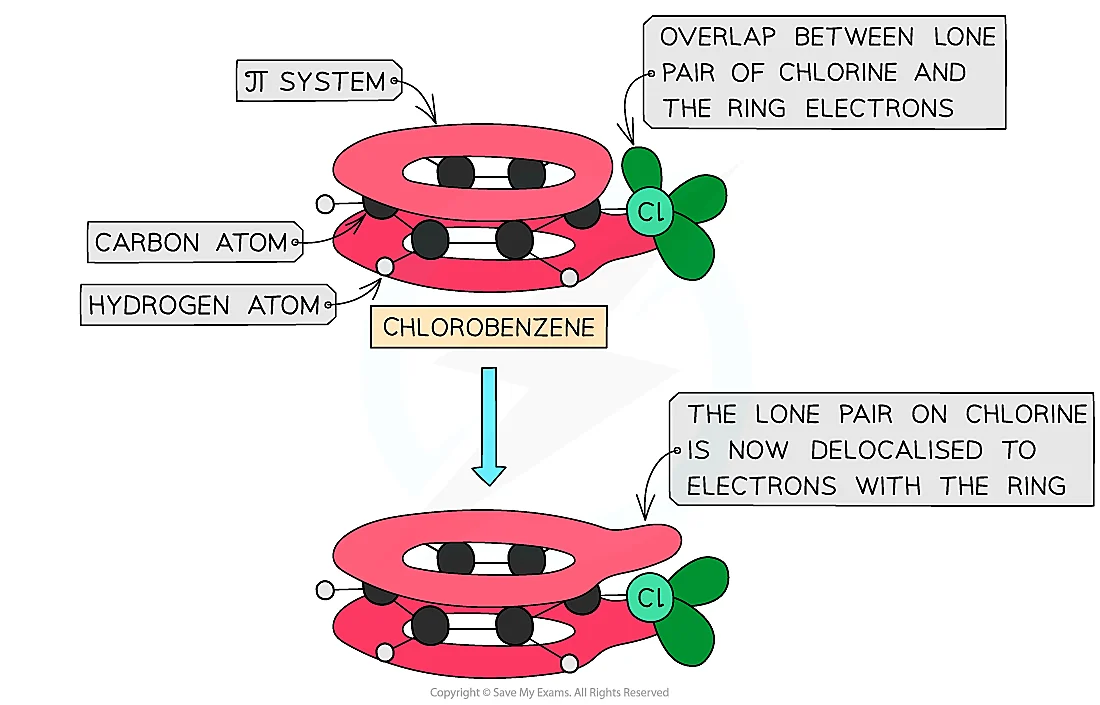
- Phenylamine: the lone pair on N is delocalised into the benzene ring — less available to accept H+ — weakest base.
19.2 Production of Primary Amines
| Method | Reagents / conditions | Equation |
|---|---|---|
| From halogenoalkane | Excess NH3 in ethanol, heat under pressure | R-X + NH3 → R-NH2 + HX |
| From nitrile | LiAlH4 in dry ether; or H2 / Ni catalyst | R-CN + 4[H] → R-CH2NH2 |
| From amide | LiAlH4 in dry ether | R-CONH2 + 4[H] → R-CH2NH2 + H2O |
19.3 Nitriles
Nitriles contain the -C≡N functional group. They are useful for chain extension (adding one carbon atom to the chain).
- Formation: R-X + KCN in ethanol, reflux → R-CN + KX (nucleophilic substitution; chain lengthens by 1 C).
- Hydrolysis: reflux with dilute HCl or H2SO4 → carboxylic acid + NH4+ salt.
CH3CH2CN + 2H2O + HCl → CH3CH2COOH + NH4Cl - Reduction: LiAlH4 / dry ether or H2 / Ni → primary amine.
CH3CN + 4[H] → CH3CH2NH2
19.4 Hydroxynitriles
Carbonyl compounds (aldehydes and ketones) react with HCN (in the presence of a base catalyst such as KCN or NaCN) to form 2-hydroxynitriles (cyanohydrins).
Hydroxynitriles are useful intermediates:
- Hydrolysis of the -CN group → α-hydroxy carboxylic acid (e.g. CH3CH(OH)CN + 2H2O + H+ → CH3CH(OH)COOH + NH4+).
- Reduction of the -CN group → amino alcohol (e.g. CH3CH(OH)CN + 4[H] → CH3CH(OH)CH2NH2).
20Polymerisation (AS)
20.1 Addition Polymerisation
Addition polymerisation involves the joining together of many alkene monomer units. The C=C double bond opens up and the monomers link together to form long chains. No small molecules are lost.
Repeat unit: the smallest repeating section of the polymer chain. To draw a repeat unit from a monomer: open the C=C and put brackets around the two-carbon fragment.
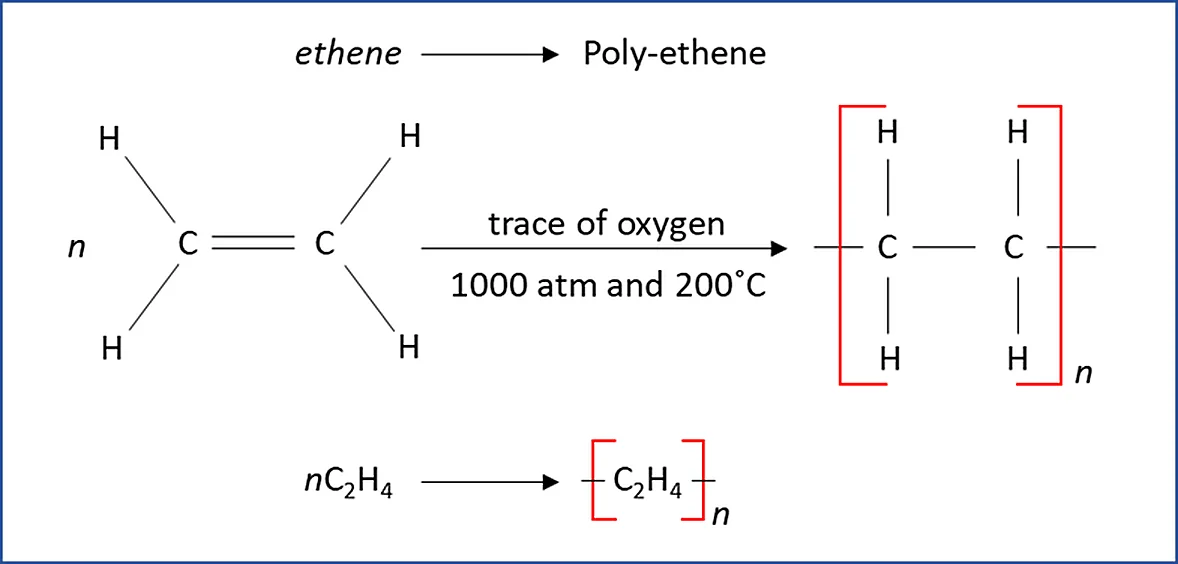
| Monomer | Repeat unit | Polymer name | Common use |
|---|---|---|---|
| ethene | [−CH2−CH2−] | poly(ethene) | plastic bags, bottles |
| chloroethene | [−CH2−CHCl−] | poly(chloroethene) (PVC) | pipes, window frames |
| propene | [−CH2−CH(CH3)−] | poly(propene) | crates, rope |
| phenylethene | [−CH2−CH(C6H5)−] | poly(phenylethene) (polystyrene) | packing, insulation |
| tetrafluoroethene | [−CF2−CF2−] | poly(tetrafluoroethene) (PTFE) | non-stick coatings |
20.2 Deducing the Monomer from a Repeat Unit
Work backwards: replace the single C-C bond in the repeat unit with a C=C double bond, and remove the brackets. Any side groups stay attached to the same carbon.
20.3 Environmental Issues
- Non-biodegradable: C-C backbone is chemically inert; bacteria and fungi cannot break it down. Polymers persist in landfill for hundreds of years.
- Toxic combustion products: PVC releases HCl; polyurethanes release HCN; burning polystyrene releases soot and CO.
- Solutions: recycling (mechanical: melting and remoulding; chemical: cracking back to monomers), biodegradable alternatives (e.g. polylactic acid from corn starch), and energy recovery (incineration for electricity generation).
21Organic Synthesis (AS)
21.1 Strategy
- Identify start and target functional groups.
- Plan a route via known intermediates (alcohol ↔ halogenoalkane ↔ alkene ↔ carbonyl ↔ acid ↔ ester).
- Specify reagents, solvent, temperature and catalyst for each step.
- Avoid steps that produce unwanted by-products; consider chain length.
21.2 Key Conversions
| From | To | Reagents / conditions |
|---|---|---|
| Alkene | Halogenoalkane | HBr(g) or HCl(g) |
| Alkene | Alcohol | Steam / H3PO4, 300 °C, 60 atm |
| Alkene | Diol | Cold dilute KMnO4 / H+ |
| Halogenoalkane | Alcohol | NaOH(aq), reflux |
| Halogenoalkane | Alkene | NaOH in ethanol, heat |
| Halogenoalkane | Nitrile (chain +1C) | KCN in ethanol, reflux |
| Halogenoalkane | Primary amine | NH3 in ethanol, heat, pressure |
| Alcohol | Aldehyde | K2Cr2O7/H+, distil |
| Alcohol | Carboxylic acid | K2Cr2O7/H+, reflux |
| Alcohol | Halogenoalkane | PCl5 or SOCl2 or KBr + conc. H2SO4 |
| Alcohol | Alkene | conc. H2SO4, 170 °C or Al2O3, hot |
| Alcohol | Ester | RCOOH + conc. H2SO4 cat., warm |
| Aldehyde | Primary alcohol | NaBH4 or LiAlH4 / dry ether |
| Aldehyde | Carboxylic acid | K2Cr2O7/H+, reflux |
| Ketone | Secondary alcohol | NaBH4 or LiAlH4 / dry ether |
| Carboxylic acid | Primary alcohol | LiAlH4 / dry ether |
| Carboxylic acid | Ester | ROH + conc. H2SO4 cat., warm |
| Carboxylic acid | Carboxylate salt | NaOH, Na2CO3, or reactive metal |
| Nitrile | Carboxylic acid | Dilute HCl or H2SO4, reflux |
| Nitrile | Primary amine | LiAlH4 / dry ether or H2 / Ni |
21.3 Multi-step Routes
Identify every functional group, then list the type of reaction and the exact reagent/condition for each step. Watch for extra carbons (KCN) and for oxidation that can overshoot (distil vs reflux). Possible by-products: further substitution of amines, over-oxidation of aldehydes, elimination competing with substitution.
22Analytical Techniques (AS — IR & MS)
22.1 Infrared Spectroscopy
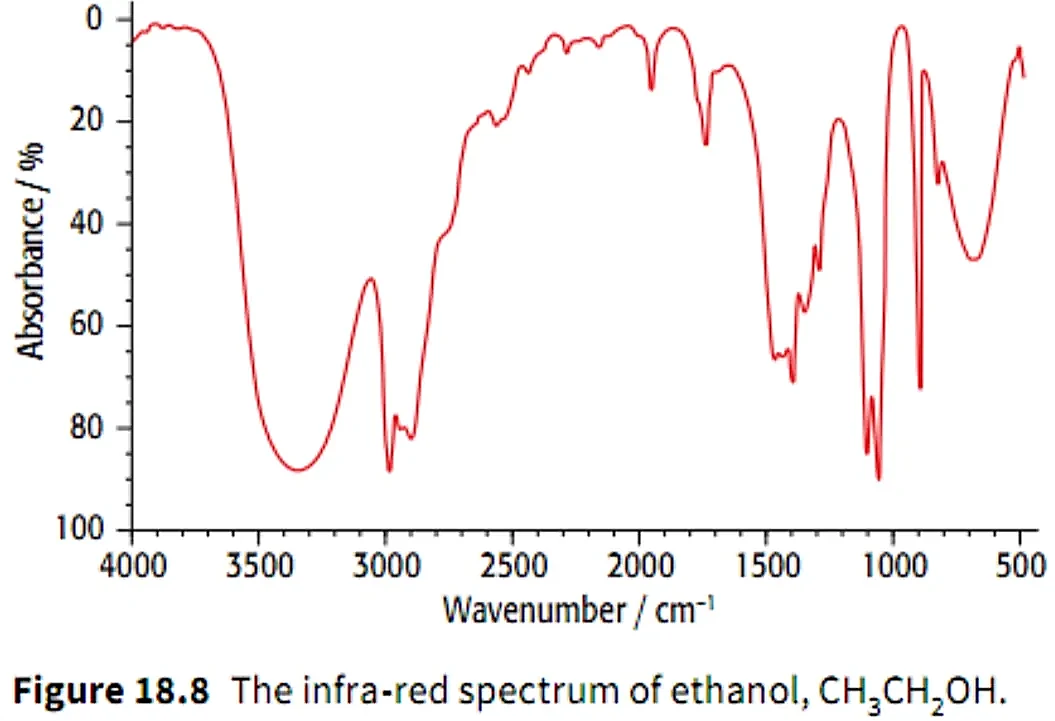
| Bond | Group | Wavenumber / cm−1 |
|---|---|---|
| C-O | alcohol, ester | 1040-1300 |
| C=C | alkene, arene | 1500-1680 |
| C=O | aldehyde, ketone, acid | 1670-1740 |
| C=O | ester | 1710-1750 |
| C≡N | nitrile | 2200-2250 |
| C-H | alkane | 2850-2950 |
| O-H (broad) | carboxylic acid | 2500-3000 |
| N-H | amine, amide | 3300-3500 |
| O-H | alcohol | 3200-3600 |
22.2 Mass Spectrometry
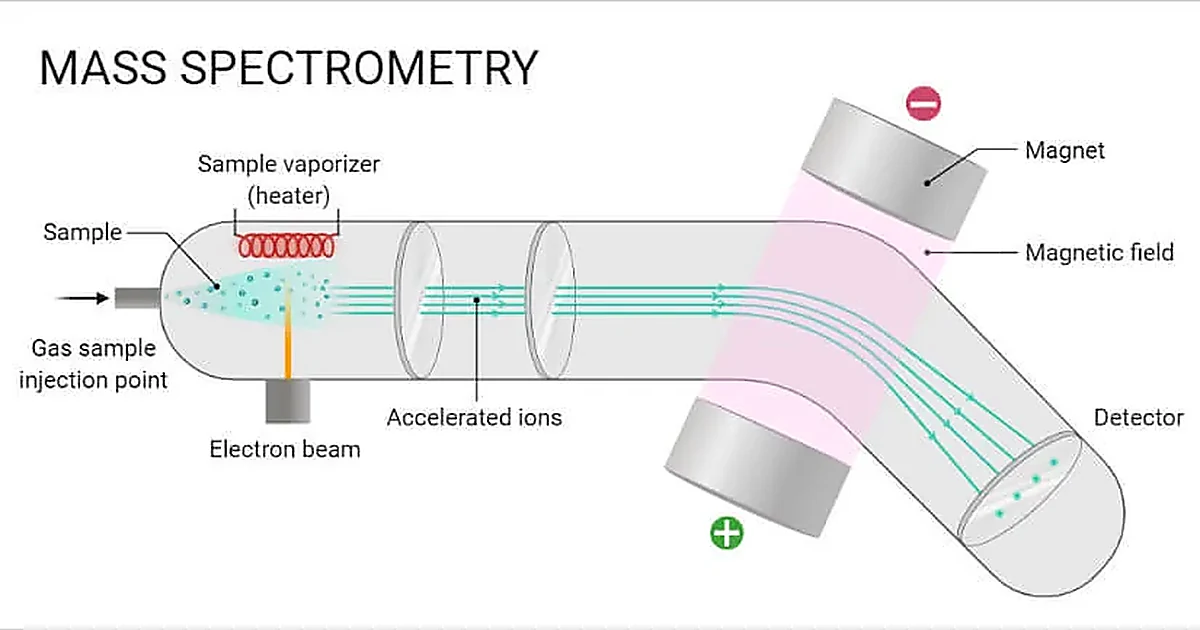
- M+ peak — molecular mass.
- [M+1]+ from 13C: nC = 100 × I(M+1) / (1.1 × I(M)).
- [M+2]+: M:M+2 ≈ 3:1 for one Cl (35Cl:37Cl), and ≈ 1:1 for one Br (79Br:81Br).
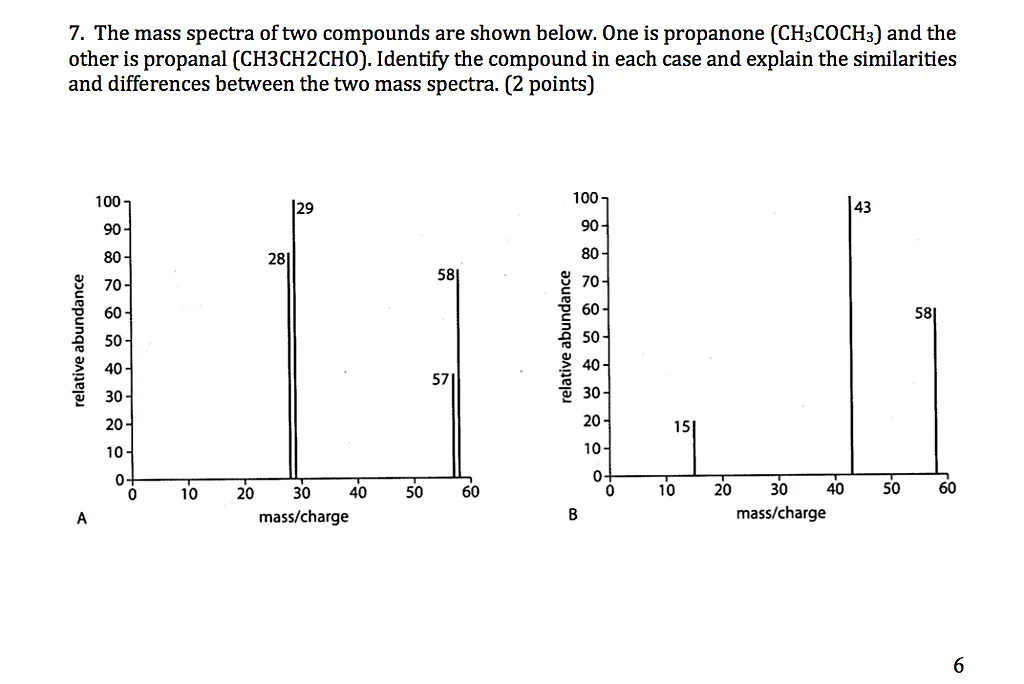
- Fragmentation: loss of 15 (CH3), 17 (OH), 29 (CHO or C2H5), 31 (OCH3), 43 (C3H7 or CH3CO), 45 (COOH or OC2H5).
22.3 Using the Data-Booklet Peaks
IR: match strong absorptions to O−H (broad, acids very broad), C=O (~1700 cm−1), C−O, C≡N, C−H. Absence of a peak can be as useful as its presence.
MS: M+ peak gives Mr. The [M+1]+ peak height estimates the number of carbons. Simple fragments (15 = CH3, 29 = C2H5 / CHO, 77 = C6H5) identify pieces. Ar from isotope abundances is a weighted mean.
ASRevision Guide Exam Boosters
AS Paper 1/2 high-yield checks
| Area | What to write in exam answers | Common trap |
|---|---|---|
| Atomic structure | Use proton number to define the element; use mass number minus proton number for neutrons. For ionisation energy definitions, include gaseous atoms, one mole and one electron. | For transition-metal ions, remove 4s electrons before 3d electrons. |
| Stoichiometry | Convert volumes to dm3 for concentration calculations and temperatures to K for pV = nRT. Use the balanced equation mole ratio before deciding the limiting reagent. | Using the reagent in excess as the limiting reagent because it has the larger starting mass. |
| Bonding and structure | Link property to structure and bonding: type of particles, forces between them, and whether mobile charged particles are present. | Saying "strong intermolecular forces" for giant ionic, metallic or covalent structures. |
| Energetics | For Hess cycles, keep arrows consistent. For calorimetry, quote heat loss, incomplete combustion and evaporation as likely reasons experimental values are less exothermic. | Forgetting that bond breaking is endothermic and bond making is exothermic. |
| Equilibrium and rates | Only temperature changes Kc or Kp. Catalysts increase both forward and reverse rates equally. Temperature increases rate mainly by greatly increasing the fraction with E ≥ Ea. | Claiming a catalyst changes equilibrium yield or that rate orders come from equation coefficients. |
AS organic reaction conditions
| Conversion | Reagents and conditions | Observation / exam note |
|---|---|---|
| Alkane to halogenoalkane | Cl2 or Br2, ultraviolet light | Free-radical substitution; mixture of products likely. |
| Alkene to alcohol | Steam, H3PO4 catalyst, high temperature and pressure | Hydration; addition across C=C. |
| Alkene test | Br2(aq), room temperature | Orange/brown to colourless; electrophilic addition. |
| Halogenoalkane to alcohol | NaOH(aq), heat under reflux | Nucleophilic substitution. |
| Halogenoalkane to alkene | NaOH or KOH in ethanol, heat | Elimination; forms H2O and halide ion. |
| Primary alcohol to aldehyde | Acidified K2Cr2O7, distil | Distillation prevents further oxidation. |
| Primary alcohol to carboxylic acid | Acidified K2Cr2O7, reflux | Use excess oxidising agent; orange to green. |
| Carbonyl to hydroxynitrile | HCN generated from KCN/NaCN and dilute acid | Planar C=O gives a racemic mixture if a chiral centre forms. |
| Nitrile to amine | LiAlH4 in dry ether, then water | Adds one carbon before reduction when made from halogenoalkane + CN-. |
AS practical wording
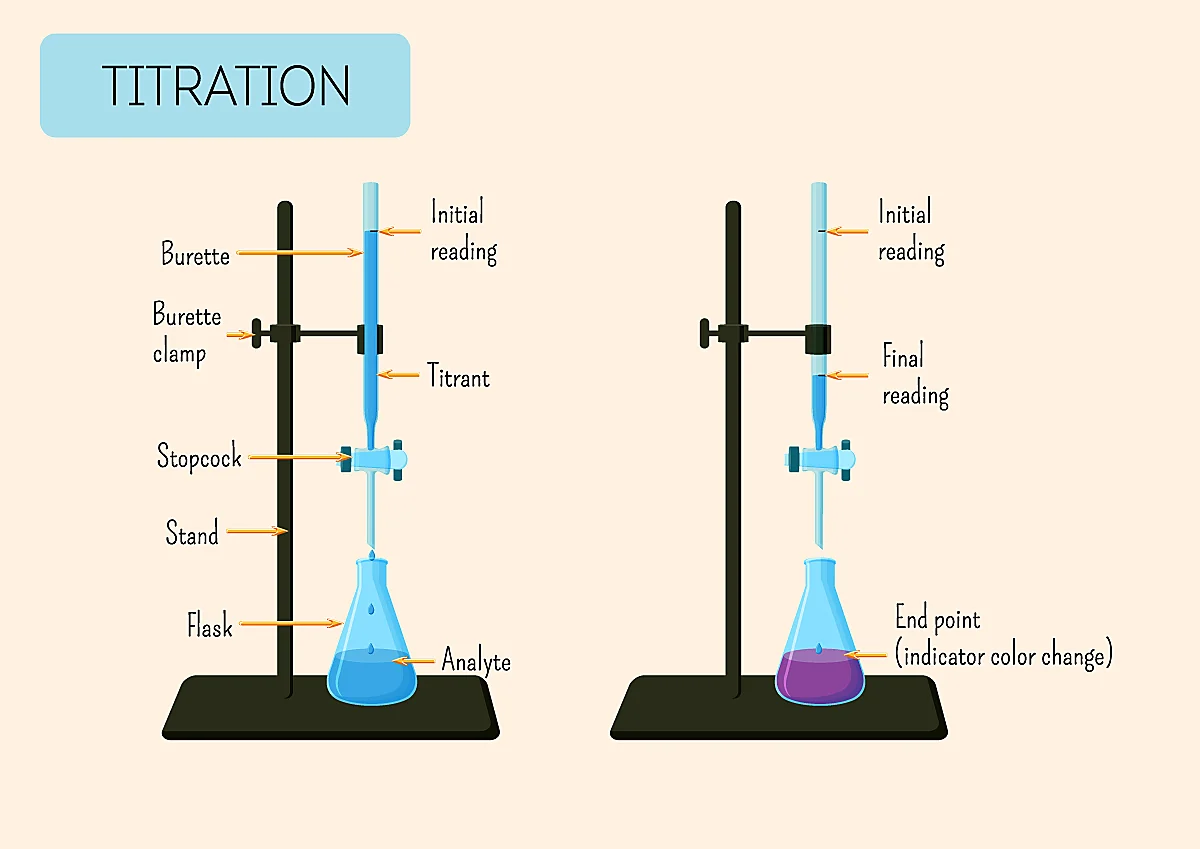
- Titration reliability: rinse burette with the solution it will contain, remove funnel before titrating, read the meniscus at eye level, and repeat until concordant titres are obtained.
- Calorimetry improvements: use a lid, insulation, a draught shield and a more precise thermometer; extrapolate cooling curves when required.
- Qualitative analysis: describe precipitate colour, solubility in excess reagent, gas test and final inference. Do not infer an ion from colour alone.
- Uncertainty: percentage uncertainty = absolute uncertainty / measured value x 100. For repeated measurements, use half the range as an estimate when appropriate.